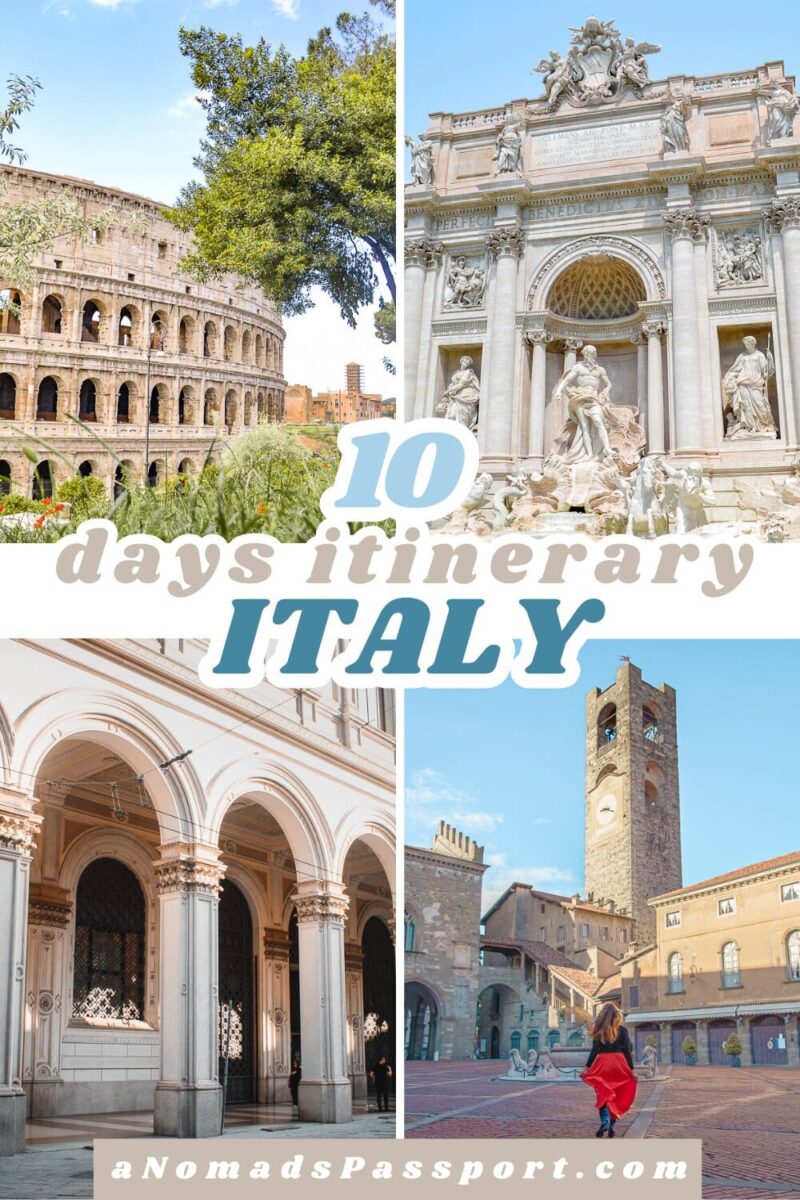
It is no secret that Italy is one of the most beautiful and culturally rich destinations. There is something special about spending the summer in the Italian heat, eating fresh pasta every evening, and sipping Aperol Spritz. However, one problem with choosing to visit Italy is that there is simply too much to see. While this is a rather nice problem, it can make choosing where to go pretty overwhelming – especially if you are short on time.
This 10 days in Italy itinerary is perfect for anyone who has less than two weeks and wants to see the very best of Italy by train. If you follow this Italy itinerary, you will be guided through some of Italy’s most iconic cities: Milan, Venice, Bologna, Rome, and Naples.
Each destination offers something unique about Italy, from its fashion capital, romantic canals, culinary delights, and historic grandeur. Get ready for an unforgettable 10 days long journey through Italy’s most captivating cities.

This post may contain affiliate links(*), which means I may receive a commission, at no extra cost to you if you make a purchase through a link. Please see the full disclosure for further information.
Overview: 10 Day Italy Itinerary
Have you read this 10 day Italy itinerary, and want to book your hotels and train rides? If so, this overview is what you are looking for!
- Day 1 & 2: Milan (with a day trip) — stay at Galleria Vik Milano
- Day 3 & 4: Venice — getting to Venice — stay at Palazzo Stern
- Day 5 & 6: Bologna — getting to Bologna — stay at Hotel Bren
- Day 7 & 8: Rome — getting to Rome — stay at Hotel Romano
- Day 9 & 10: Naples — getting to Naples — stay at Hart Boutique Hotel
10 Days in Italy by Train Itinerary
Why explore Italy by train?
If you are planning an Italy trip that focuses on cities, it makes no sense to rent a car. After all, you would only need a car to get from city to city as it is significantly faster to use public transport to get around the cities. Especially, as you would also have to look for a parking spot – something that can be quite expensive.
Thankfully, you can easily travel by train, as all of Italy’s main cities are well connected by train. Therefore, exploring Italy by train is the most convenient and relaxing option. Not only is train travel environmentally friendly, but it also allows you to travel between major cities in just a few hours – often faster even than driving.
Compared to other European countries, train tickets in Italy tend to be very affordable, which means they are also a fantastic option if you are traveling on a budget. Traveling by train is the ideal choice for both your budget and the planet while helping you maximize your time to explore the highlights of Italy. The only thing to note is that it is recommended to book your train ride in advance.
Day 1 & 2: Milan (& Day Trip)
Milan is a great place to start for any Italy itinerary, not only because it tends to have the cheapest flights, but because its bustling energy and beautiful buildings mean it should be visited at least once in a lifetime.
How to get from Milan Airport to the city center: Milan has three airports, with Linate (LIN) being the closest to the city center. You can easily take the shuttle bus to the city center. The most convenient way to get to Milan from the main airport Malpensa (MXP) is taking the Malpensa Express. There are frequent buses from Bergamo Airport (BGY) to Milan.
If you do not mind splurging for a unique experience, you should stay at the Galleria Vik Milano. The luxurious rooms of this 5-star hotel have windows that are inside Galleria Vittorio Emanuelle, so staying in this hotel will reward you with the most stunning view. Alternatively, Room Mate Giulia is a good option.
Day 1: Explore Italy’s Fashion Capital
Upon arriving in Milan, you will get your first taste of Milan’s grad architecture at Milano Centrale Station. A destination in its own right, the station was designed by the French architect Lous-Jules Bouchot and is reminiscent of Paris in the 1800s. From there, you can begin exploring the rest of Milan.
A visit to the famous Milan Cathedral, or Duomo di Milano, is a must. The Gothic architecture is iconic, and a visit to the rooftop is well worth the stunning views of the city. Across the square, you will find Galleria Vittorio Emanuele II. This historic shopping gallery is filled with some of the oldest shops and restaurants in Milan. It is the perfect place for some window shopping and enjoying a mid-morning coffee in one of its beautiful cafes.

A short walk from the Duomo and the Galleria you will find Sforza Castle or Castello Sforzesco. Whilst it was once a military citadel, it has now been transformed into an artistic hub, filled with several museums and art collections. Explore the different exhibits and stroll through Sempione Park for a moment of serenity.
Afterward, you should make sure to visit the Brera district, Milan’s artistic neighborhood known for its bohemian atmosphere and boutique shops. It is also home to the Pinacoteca di Brera, an art gallery that features some of the greatest Italian masterpieces of the 13th to 20th centuries. If you want to enjoy some pasta or pizza, I recommend eating at the nearby El Beverin restaurant.
If you are not too tired, the Naviglio quarter with its interconnected canals is the perfect place to go. Sit down with a cocktail or a glass of wine at one of the many restaurants and bars along the Naviglio Grande Canal to end your first day in Italy.
Day 2: Day Trip to Lake Como or Bergamo
On your second day in Italy, continue to explore Milan or do a day trip. Hereby, the beautiful Lake Como is a fantastic option. Just an hour away from Milan, you can easily spend an afternoon or a complete day here while exploring its breathtaking lakeside views and charming villages.
Jump on the train to Como San Giovanni, where you can explore the charming village of Como before taking a ferry to Bellagio. Bellagio is situated on a promontory and offers some of the most incredible views of both sides of the lake. Explore its lush gardens, sip Italian wine at lakeside restaurants, and browse its quaint shops before making your way back to Milan.
If you do not want to arrange this day trip on your own, you can also book it as a guided tour that includes a boat cruise.

Alternatively, you can also plan a day trip to Bergamo, a charming medieval city. It is one of the country’s hidden gems and enchants visitors with winding cobblestone roads and captivating buildings of different architectural periods. Split between the upper Citta Alta and the lower Citta Bassa, this city offers two different experiences.
Connected by a historic funicular, the lower part offers many churches and plazas, while the very top of the upper city offers breathtaking views of Bergamo and the surrounding area. Rocco di San Vigilio hill can be accessed by another funicular, and aside from panoramic views, it is the location of the Torre Castello San Vigilio ruins.
How to get to Bergamo: To get to Bergamo, you can either take the train or the bus. The train ride takes 48 minutes to 1:12 h and there are many connections throughout the day. A bus ride takes around the same time and prices vary.
Day 3 & 4: Venice
With its canals and imposing buildings, Venice is undeniably a bucket list destination. There are few travelers who do not dream of riding a gondola or drinking a cup of coffee while looking over Piazza San Marco. It is a city with a rich cultural heritage and offers visitors the perfect combination of art, history, and architecture.
How to get from Milan to Venice: If you travel by train, it takes 2:30 to 3:30 to get from Milan to Venice. Hereby, some trains are direct trains, while other connections require you to switch trains in Verona. Book your ticket here.
If you are looking for a hotel in a prime destination, Palazzo Stern is the perfect option. Located right next to the Ca’Rezzonico Museum, it provides easy access to the entire city.
Day 3: Stroll along the Canals of Venice
After arriving at Venice Mestre station, you can catch a train to Stazione di Venezia Santa Lucia. Upon arrival, you will immediately be greeted by the Grand Canal. For a truly Venetian experience, hop on a vaporetto, a type of water bus, to travel to your accommodation and start your time off in Venice the right way.
Grab lunch at a local cafe and try some traditional Venetian food like risotto al nero di seppia (squid ink risotto) or sarde in saor (sweet and sour sardines). Once you have eaten, you can kick off your first afternoon in Venice, by visiting the impressive Gothic Doge’s Palace (Palazzo Ducale) and admiring the Bridge of Sighs which connects the palace to its prison.
Afterward, explore the Rialto Bridge, one of Venice’s more famous landmarks, and grab some fresh produce and local specialties from the Rialto Market to snack on during the rest of your stay. End your day by heading to the Basilica di San Marco. The bell tower will reward you with a stunning sunset view!
Day 4: Explore Venice’s Islands
If you want to see Piazza San Marco without the crowds, you should head there around sunrise. Afterward, get a vaporetto to Murano, the island of Venice famous for its glassmaking. Once there, visit a glass factory to see a live demonstration of this glass-blowing skill before heading to Museo del Vetro, the Murano Glass Museum.
Then, sail over to Burano, an island known for its brightly colored houses and lace-making tradition. With its charming streets and cafes, it is perfect for simply strolling around. Grab some lunch and enjoy traditional seaside food like bigoli in salsa (pasta with anchovy sauce).
If you have enough time, head over to the nearby island of Torcello. It is much quieter than the previous two and offers some insight into Venice’s history. Visiting the Basilica di Santa Maria Assunta with its impressive mosaics is a must.
Head back to Venice to explore the Cannargio district. A lot less touristy than the rest of Venice, this beautiful district is filled with authentic Venitian restaurants and small businesses. It does get busier in the late afternoon and evening, providing a lively atmosphere.
Finish your final evening in Venice with a sunset gondola ride. They are very touristy, but it is almost a right of passage to travel through the canals of Venice on a gondola. In the evening and at night, a private 25 to 30 minutes long gondola tour costs 120€.
Day 5 & 6: Bologna
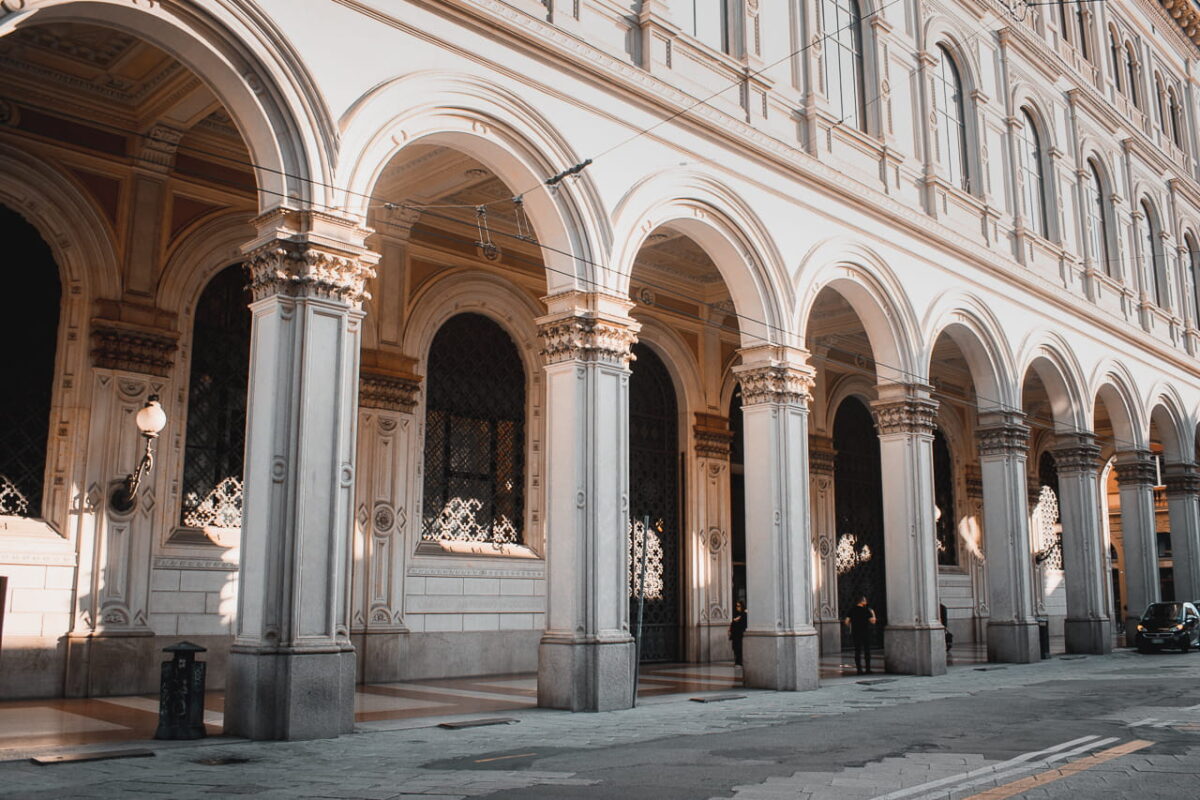
On your 5th day in Italy, it is time to head inland to spend the next two days in Bologna. The station is right in the city center, which, conveniently, is one of the best areas to stay in Bologna – especially when you’re short on time. The city has made a name for itself as Italy’s culinary gem, and as you start exploring Bologna, you should take the time to admire the porticoes that line the streets. Each one is unique, and you will begin to notice intricate details from wooden carvings to hand paintings.
How to get from Venice to Bologna: A train ride from Venice to Bologna takes 1:30 to 2:15h. Hereby, the slower Trenord trains are the cheapest option. Book your train ride here.
If you are looking for a great hotel in Bologna, Hotel Bren in the historic city center is a fantastic option.
Day 5: Explore the Red City
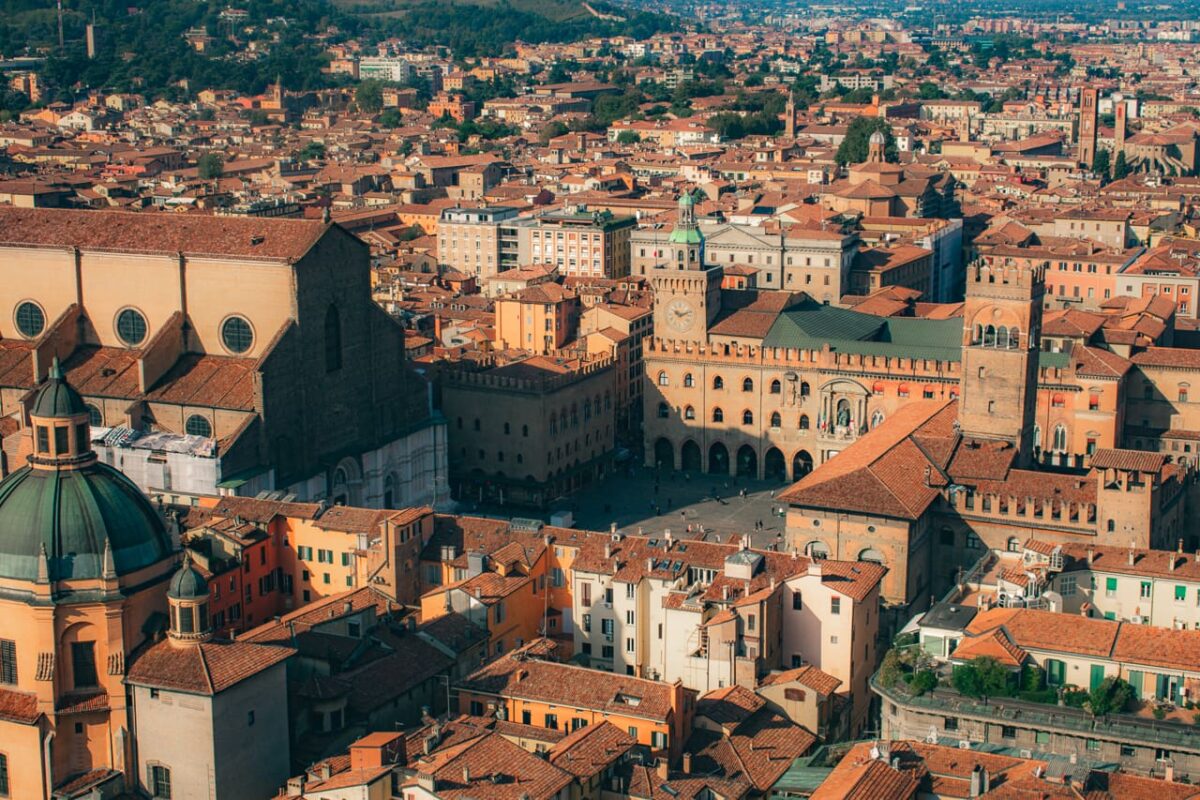
Thanks to its terracotta-tiled rooftops, Bologna is also known as the Red City or la Rossa. To see them for yourself, head to the Two Towers. While one tower looks very precarious, you can still climb the 498 steps to the top of the second tower which is known as the Asinelli Tower.
Just around the corner, you will find the Santuario di Santa Maria della Vita. It is home to the famous Lamentation over the Dead Christ sculptures by Niccolò dell’Arca and can be visited for free. Next head to the Piazza Maggiore, one of Bologna’s most famous squares. It is surrounded by important buildings including the Palazzo d’Accursio, the Fountain of Neptune, and the Basilica of San Petronio. Though the eighteenth-century church was never completed, it is still a stunning piece of architecture.
Finally, head to the Archiginnasio di Bologna. Once the University of Bologna’s main building, this Palace is stunning. It charms visitors with frescoed ceilings and the Teatro Anatomico, a lecture theatre decorated with dark wooden carvings once used to teach anatomy.
For dinner, head to a local restaurant to try some specialties. Osteria dell’Orsa is a great traditional restaurant with a relaxed atmosphere and authentic Italian service. Get a bottle of Italian wine and try Bologna’s famous ragù, a rich meat sauce served with tagliatelle, or in a classic lasagna.
Day 6:
On your second day in Bologna, start with a walk to the Sanctuary of the Madonna di San Luca. Sitting above Bologna in the surrounding hills, it takes around 1:20 h to walk up the 4 km-long Portico di San Luca to the Sanctuary. While this might seem a lot, the 666 archways and view of the city at the top make it a very rewarding walk. Explore the Sanctuary and then catch the bus or train back to the city center.
Back in the city, head to the Quadrilatero, Bologna’s oldest market. The market’s vibrant atmosphere, local produce, and incredible street food make it the perfect place for a lunchtime snack and deem it the ideal spot to gain an insight into local life.
The final stop in Bologna is the Archeological Museum, which holds one of Italy’s most important archaeological collections. Given the country’s rich history, this museum is not one to skip. It houses everything, from Greek and Roman art to Egyptian antiques, and even local Gallic artifacts found within Bologna itself.
Finally, catch a late afternoon train and head to your next stop on this 10 day Italy itinerary so you can wake up in the Eternal City, Rome.
Day 7 & 8: Rome
Are you ready for two very busy days? Rome is a beautiful city and there is a lot to see. Ideally, you would have longer here, but you can see a lot of Rome’s charm and iconic landmarks with limited time if you know how to maximize your time.
How to get from Bologna to Rome: If you catch a direct high-speed train, it takes around 2 hours to 2:30 hours to get from Bologna Centrale to Roma Termini station.
Hotel Romano is a great place to stay if you want to be close to the city’s historic center. The rooms offer a great view of the Roman Forum.
Day 7: Explore Ancient Rome
Start your first day in Rome by getting up early and heading straight to the Colosseum. It is undeniable Rome’s most iconic landmark and as such, it is best to get here as early as possible to miss the crowds. Explore the New Wonder of the World and its impressive architecture, before heading to the Roman Forum. Adjacent to the Colosseum, it was once the heart of ancient Rome’s political and social world.
If you’d like to see a unique perspective of the Forum and the city, take a walk up Palatine Hill, which is believed to be the site, where Rome was founded. Both the Roman Forum and Palatine Hill are included in the Colosseum entry ticket, but if you want to learn more about what you are seeing, it is best to do a guided tour. Some tours take you into the tunnel under the Colosseum.
Once you are done exploring, grab some lunch, before walking along the Via dei Fori Imperiali, a road that connects the Colosseum to the Piazza Venezia. Along the way, you will see more sites of Ancient Rome such as the Forum of Trajan, the Forum of Augusts, and the Forum of Nerva.

Continue walking towards the Patheon, one of the most well-preserved ancient Roman temples with an impressive dome and oculus.
Only a few minutes away, you will find the famous Trevi Fountain. Make sure to toss a coin into the fountain with your right hand over your left shoulder to ensure your return to Rome. The fountain is very busy by this time of the day, so if you want to see it without the crowds, it might be worth returning there first thing tomorrow morning. You have to be there around 6 AM to avoid the crowds.
If you walk another 9 minutes, you will reach the Spanish Steps, the widest and longest steps in Europe. By now the sun will be setting, so it is time to relax with an aperitivo and do some people watching in one of Rome’s piazza.
Day 8: Vatican City and Modern Rome
On your second day in Rome, make your way across the river to Vatican City. Visit St. Peter’s Basilica, the world’s largest church, known for its stunning dome, and Michelangelo’s La Pietà. Afterward, explore the Vatican Museums, home to an impressive array of artistic masterpieces. And of course, no visit to the Museums is complete without marveling at the breathtaking Sistine Chapel and its iconic frescoes.
Next, head to Trastevere, a charming neighborhood known for its narrow streets and colorful buildings. Its lively atmosphere makes it a great place to eat lunch and get a glimpse of the Roman lifestyle. Make sure to visit the Basilica of Santa Maria, one of Rome’s oldest churches with beautiful mosaics, before heading to Janiculum Hill for spectacular panoramic views of the city.

If you still have time to spare, make your way to Castel Sant’Angelo, before heading back over the river. Wander through the streets and some of Rome’s Piazzas such as Piazza Navona, known for its Baroque architecture, or Campo de Fiori, a square with a market and numerous cafes. Find yourself a local trattoria to dine on traditional Roman dishes and enjoy a glass of Italian wine as your final night in Rome comes to an end.
Day 9 & 10: Naples
Located in the center of Italy, Naples has a unique character unlike any of the other cities you have visited so far. Chaotic and noisy, the city has an energy that cannot be beaten. Aside from brimming with a rich arts scene and culinary excellence, it was also the birthplace of pizza.
How to get from Rome to Naples: When traveling from Rome to Naples by train, the fastest trains reach Naples after 1:15 h. Look up all available trains here.
Hart Boutique Hotel is a nice hotel for your final days in Italy.
Day 9: Naples
Start your first day in Naples by heading to Duomo di Napoli, and marvel at the stunning architecture and the Royal Chapel of the Treasure of San Gennaro, where the blood of the city’s patron saint is kept. Then, stroll down Spaccanopli, a narrow street running through the center of Naples. It is a slice of authentic Italian living enticing with a lively atmosphere, traditional shops, street vendors, and historic buildings.
Next, head to the Naples National Archaeological Museum which holds artifacts from Pompeii and Herculaneum, before walking to Piazza del Plebiscito. It is a grand square flanked by the Royal Palace of Naples and the Basilica of San Francesco di Paolo, two of the city’s most iconic buildings. This piazza is a great spot for people watching or simply soaking up Naples’ atmosphere.
If you liked the architecture of Galleria Vittorio Emanuele II in Milan, make sure to visit Galleria Umberto I. Like the Galleria in Milan, it is an elegant shopping gallery with an impressive glass dome.
For sunset, walk along the Lungomare, Naples’ scenic waterfront promenade and home to the Castel dell’Ovo. You will get beautiful views of the bay as the sun sets and the castle gets illuminated.
Day 10: Naples or Pompeii Day Trip
Depending on when your flight back home or to your next destination departs, you can either spend your final few hours in Italy exploring more of Naples or visiting Pompeii. If you stay in Naples, you can make the best of your time by visiting areas such as the lively Quartieri Spagnoli or the famous San Gregorio Armeno Street.
If you have a bit more time, it is worth taking the 30-40-minute train ride to the ancient city of Pompeii. Exploring the UNESCO World Heritage Site is remarkable and allows you to delve into another chapter of Italy’s history. As a result of being buried by the eruption of Mount Vesuvius in 79 AD, the preserved ruins of the ancient Roman city offer you unique glimpses into the past and into the events that unfolded when the volcano erupted. Wander through the ancient Forum, the amphitheater, and the House of the Vettii.
If you prefer having a guide and an organized transfer to Pompeii and back, you can book a guided half-day tour of the archeological site. Should you not leave Italy on day 10, but on day 11, you can do a full-day tour that also includes a guided hike to the crater of Mount Vesuvius.
Head back to Naples and squeeze in a final slice of pizza before heading home or onto your next destination.
The Best Time to visit Italy
While Italy is worth a visit year-round, the best time to visit Italy is from April to June and from September to October. During these months, you can expect warm weather without it being too hot. You can also expect fewer crowds than during the peak summer season. As such, your Italy trip by train will be less expensive during those months.

While many of Italy’s cities tend to see large crowds year-round, the summer months July and August are especially crowded as they are the European main holiday time. Therefore, prices tend to be a lot higher and you will also have to deal with extreme heat while exploring the cities included in this Italy itinerary.
Additionally, places like restaurants might be closed because the owners themselves are on vacation.
Roundup: 10 Days in Italy Itinerary
And there you have the perfect Italy itinerary for 10 days that allows you to see the country’s highlights. If you follow it, your journey through Italy will grant you a diverse array of experiences that will make you fall in love with the country.
From the fashion-forward streets of Milan to the romantic canals of Venice, the culinary delights of Bologna, the timeless grandeur of Rome, and Naples, with its vibrant energy – each city offers a unique glimpse into Italy’s rich cultural heritage and history.
The great thing about this itinerary is that you do not have to worry about driving and can do it all by train. It is an efficient way of traveling that allows you to see more of Italy in a shorter amount of time, all while soaking in the beautiful landscapes along the way.
Given that the train passes other interesting cities, you could always extend your trip or simply swap out one destination for another if you have already been to one of the cities. As such, you could visit Verona instead of Venice, or Florence and Pisa instead of Rome.
After these 10 days in Italy, you will leave with a suitcase full of unforgettable memories of Italy’s iconic cities and hidden gems. Buon viaggio and arrivederci!
More about Italy
If you are planning a trip to Italy, you might also be interested in these Italy travel guides:
Weekend Trips to Italy
Hidden Gems in Italy
Which city in Italy do you want to visit the most?
Let me know in the comments below!
Planning to visit Italy soon?
Then pin this Italy Itinerary or share it with your travel buddies!