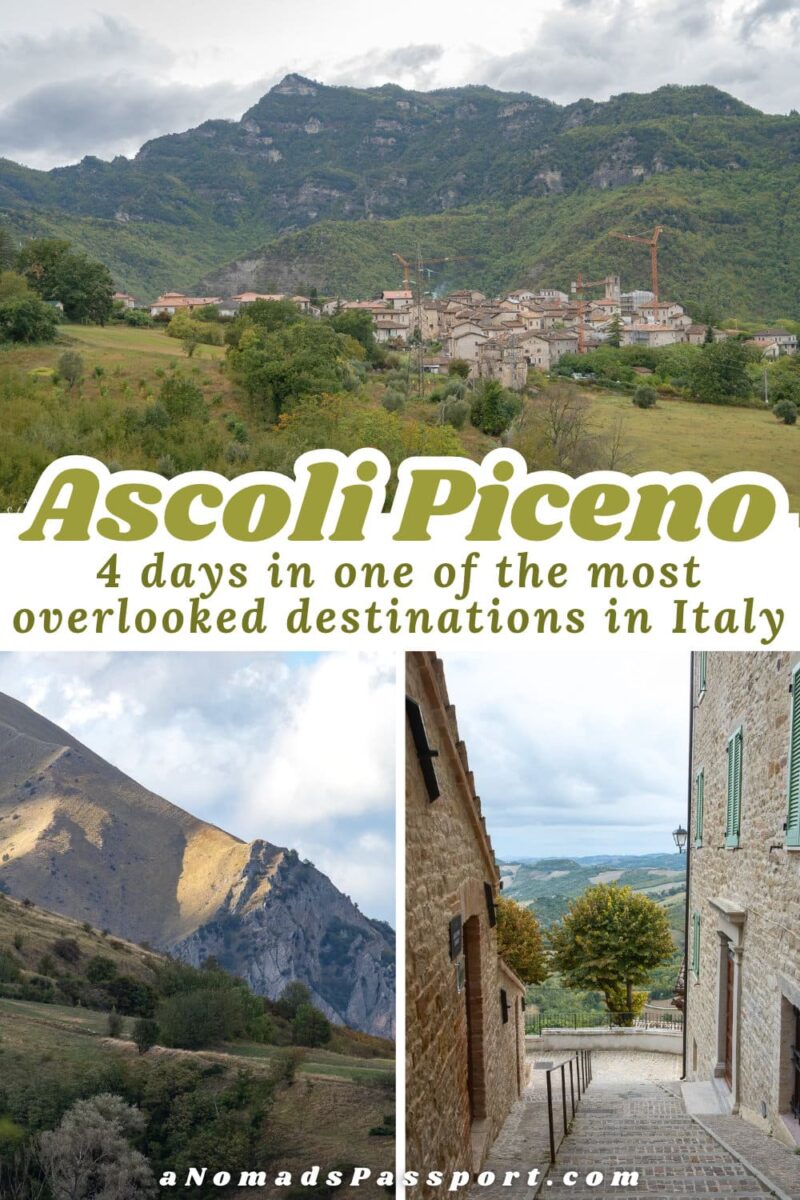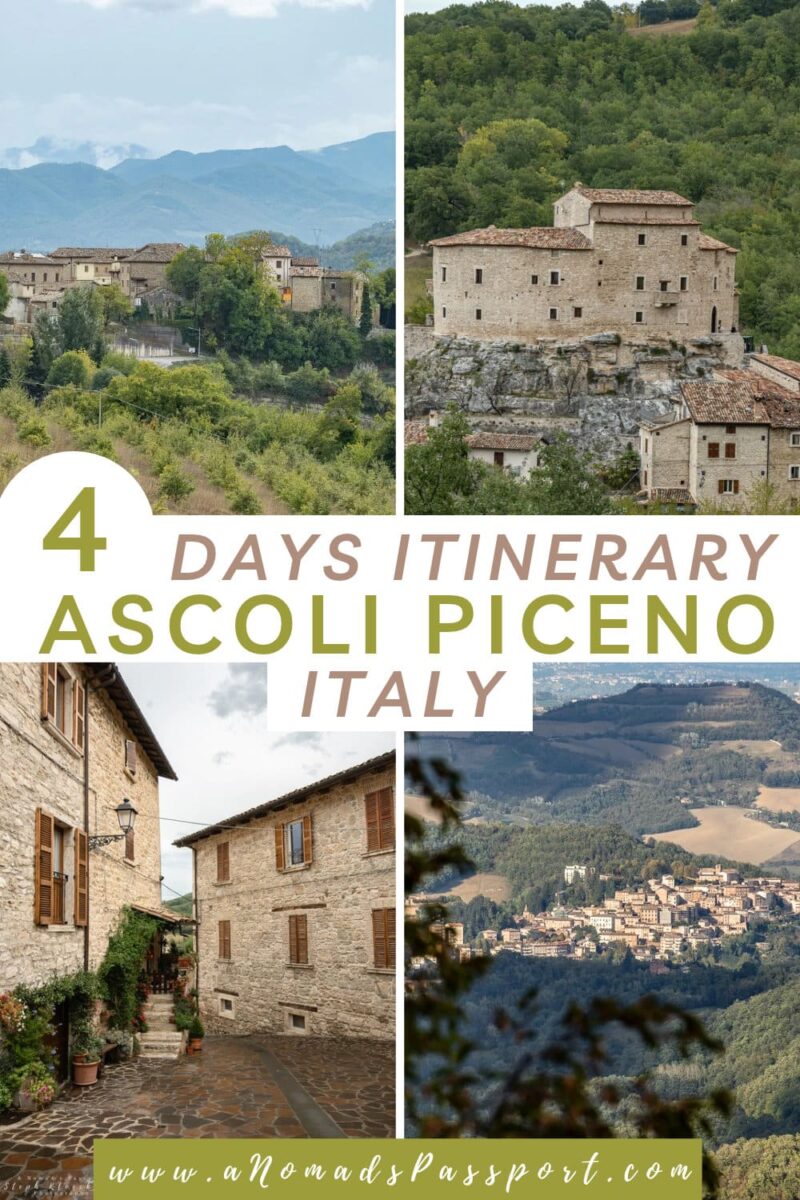
Italy is one of the most popular destinations in Europe, and yet there are still areas that few travelers venture to. These are the places that are unaltered by mass tourism and where you can experience the true essence of the country. The Ascoli Piceno province, in the region of Le Marche, is among them. Spanning from the Adriatic Sea to the Apennine Mountains, it is a province of diverse landscapes that have shaped strong regional identities. If you venture to its mountainous interior, medieval towns, culinary experiences, traditional crafts, and mountain scenery await you.
A vacation in Ascoli Piceno’s Aree Interne is an idyllic retreat that lets you rediscover the country. The area is distinctively Italy, and yet, the rural setting offers a different experience from the country’s popular destinations. Here, even the stones used to build the villages are a fundamental part of the regional identity, and natural sites are strongly connected to both history and legends. The local cuisine is another highlight, allowing you to further discover the province through its flavors.
While I have visited quite a few places in Italy and have ventured off the beaten path, my 4 days in Ascoli Piceno surprised me. It was a trip full of unexpected discoveries that highlighted how a combination of seemingly small elements gives a destination a distinctive character. While many places in Italy offer nature, culture, history, and gastronomy, the interior of Ascoli Piceno brings them together in a unique way, making it an ideal destination for travelers looking to discover a different side of Italy. This Ascoli Piceno itinerary allows you to experience the diversity of the area.
I visited the Ascoli Piceno province during a press trip organized by BIM Tronto. As always, all opinions expressed are my own.
This post may contain affiliate links(*), which means I may receive a commission, at no extra cost to you if you make a purchase through a link. Please see the full disclosure for further information.
Overview: 4 Days in the Ascoli Piceno Province
If you have already read this article about the Ascoli Piceno Province, then you know that the Aree Interne have a lot to offer. This overview will help you plan your trip.
Find the best rental car prices here.
Day 1: Arrival & Acquasanta Terme
Where to stay: Castel di Luco (1 night)
Day 2: Acquasanta Terme & Roccafluvione
Where to stay: Agriturismo Tenuta Borgio (2 nights)
Day 3: Montemonaco & Venarotta
Day 4: Force
Ascoli Piceno Itinerary
This Ascoli Piceno province itinerary is an adapted version of my own trip and focuses on the mountainous internal area. Over the course of 4 days, you will get to know the local gastronomy, legends, and history while enjoying mountain vistas and exploring medieval villages. It is ideal for travelers looking to explore Italy away from the tourist crowds.
While you could visit more places in one day, I advise against it, as a more leisurely pace allows you to take in the views, discover the charm of the villages, and savor the flavors without having to rush to the next destination. It also takes into account the travel time between destinations, as there is a good chance your drive will take longer than your navigation system predicts.
As you will be exploring mountain villages all over the Aree Interne of Ascoli Piceno, you will need a (rental) car to follow the itinerary.
How to get to Le Marche, Italy
Despite being mostly overlooked by international travelers, the Ascoli Piceno province in Le Marche is very well connected internationally. Depending on where your trip starts, you can either fly to Ancona (AOI) or Pescara (PSR). There are direct flights from many European countries including Germany, the UK, and Spain. While there are flights year-round, the largest flight availability is between June and October.
Both airports are located near the coast, and depending on the traffic conditions, it will take you approximately 1:15 to 1:50 hours to drive to Acquasanta Terme, your first stop.
Many international and regional rental car companies have offices right at Ancona and Pescara airport, so you can be on your way right after landing in Italy. Both routes include toll roads, but the one-way toll is less than 10€.
- Ancona Airport Raffaello Sanzio (AOI) to Acquasanta Terme: 1:20 h to 1:50 h; 146 km
- Abruzzo Airport (PSR) in Pescara to Acquasanta Terme: 1:15 h to 1:40 h; 121 km
Be sure to check the fuel level when you pick up your rental car and fill it up before you embark on your journey. You do not want to risk ending up on the side of the Autostrada.
If you are already in Italy, you can fly to Ancona or Pescara from airports like Milan (Malpensa and Linate), Palermo, Catania, Bari, and Cagliari. Alternatively, you can take the train or long-distance bus to the city of Ascoli Piceno and pick up your rental car there.
Day 1: Arrival & Acquasanta Terme
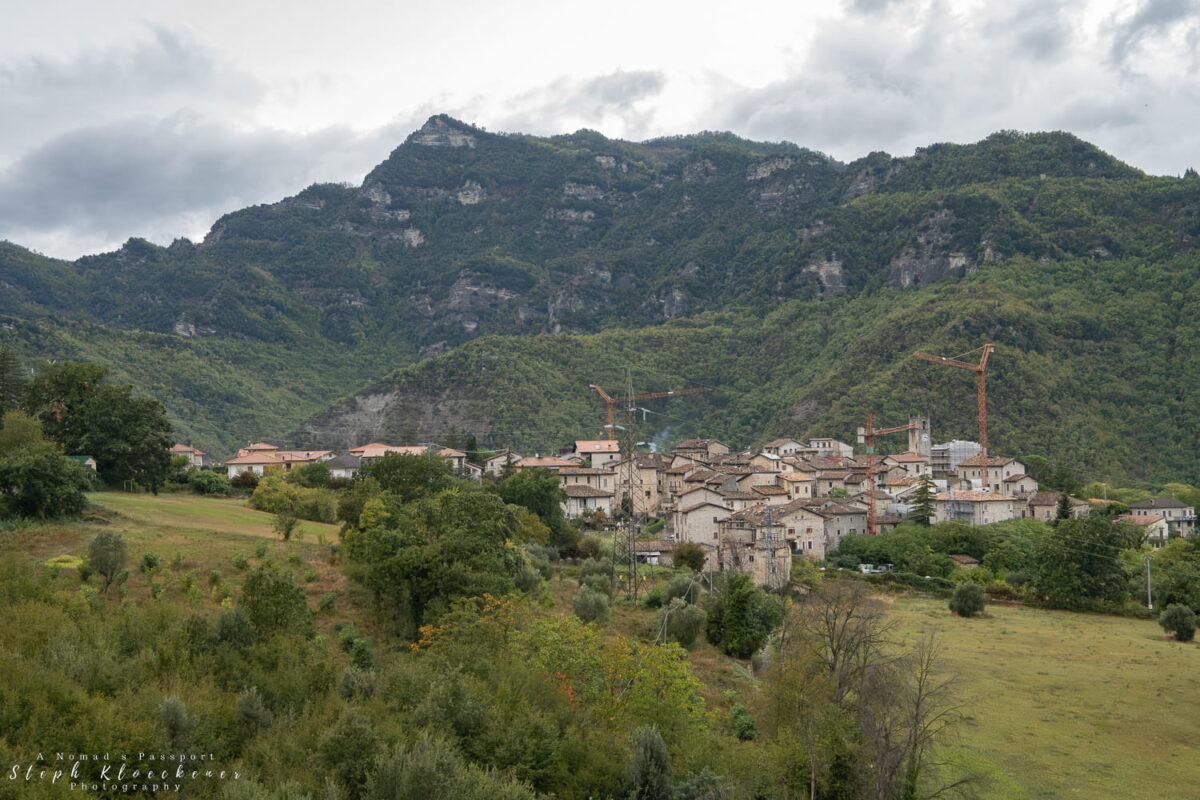
Your first day in the Ascoli Piceno province might be your arrival day and you will likely not arrive before the afternoon, but you can still get a great glimpse of some of the things that make the region special. Acquasanta Terme is located in the Tronto Valley, in a rugged landscape shaped by mountains and the Tronto river. It is located within Gran Sasso and Monti della Laga National Park, one of the largest protected areas in Europe.
Seemingly endless forests of chestnut, fir, beech, and oak trees cover the mountains around the main town and the surrounding villages, and are only interrupted by the occasional rocky outcropping.
Many of these rock sections are travertine, and in the following days, you will encounter many houses built with it.
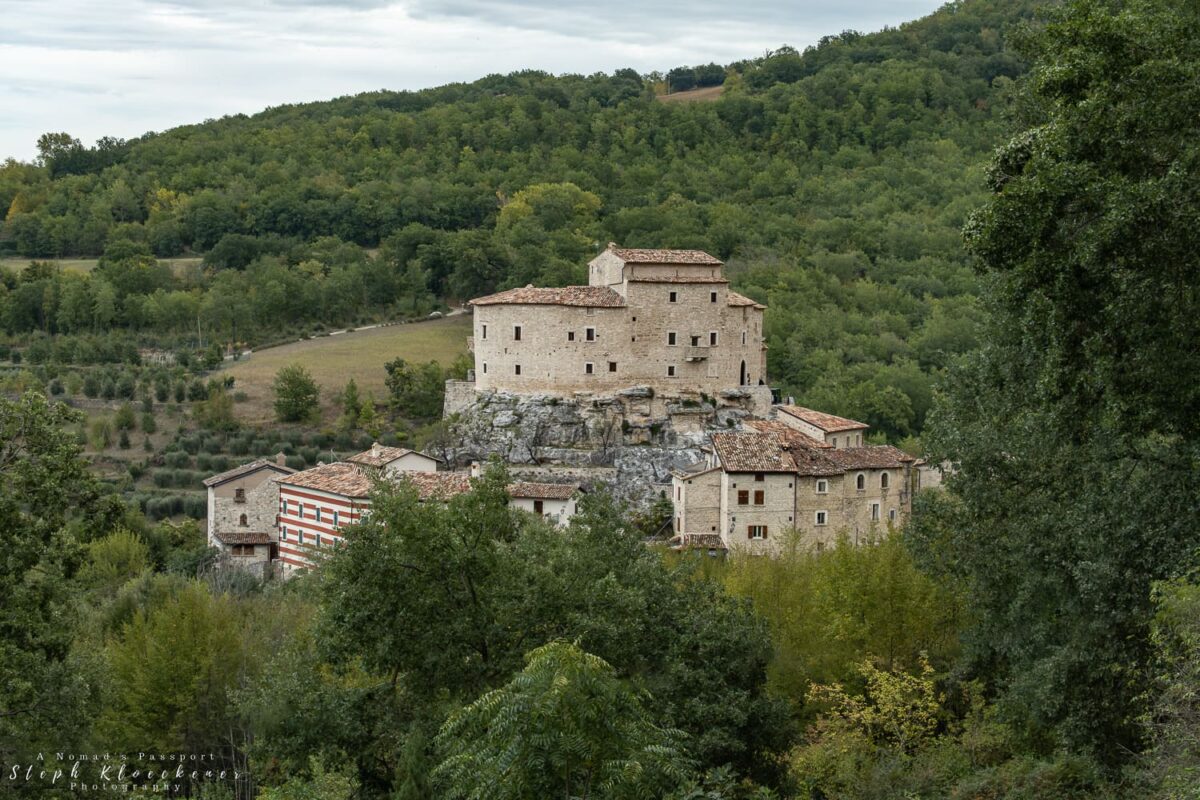
In fact, the very accommodation you will be spending the night at, Castello di Luco, is both built on a travertine outcropping and constructed with the locally quarried stone. If you arrive in Acquasanta around mid-afternoon, you will be able to check in right away and get to enjoy the full castle-stay experience.
Where to stay: Castello di Luco
Castello di Luco is an 11th-century fortification that has been restored and transformed into one of the most unique and charming accommodations in Italy. It has all the amenities of a modern hotel, but in a historic setting, which makes staying there worth a trip to the Ascoli Piceno province, before you have even explored all the area has to offer.
During the restoration, original features such as frescos on the ceilings and walls were carefully restored, and are part of the guest rooms. Even the castle kitchen has been preserved and still features its historic furniture. It now functions as a parlor-like room with an honor system bar.
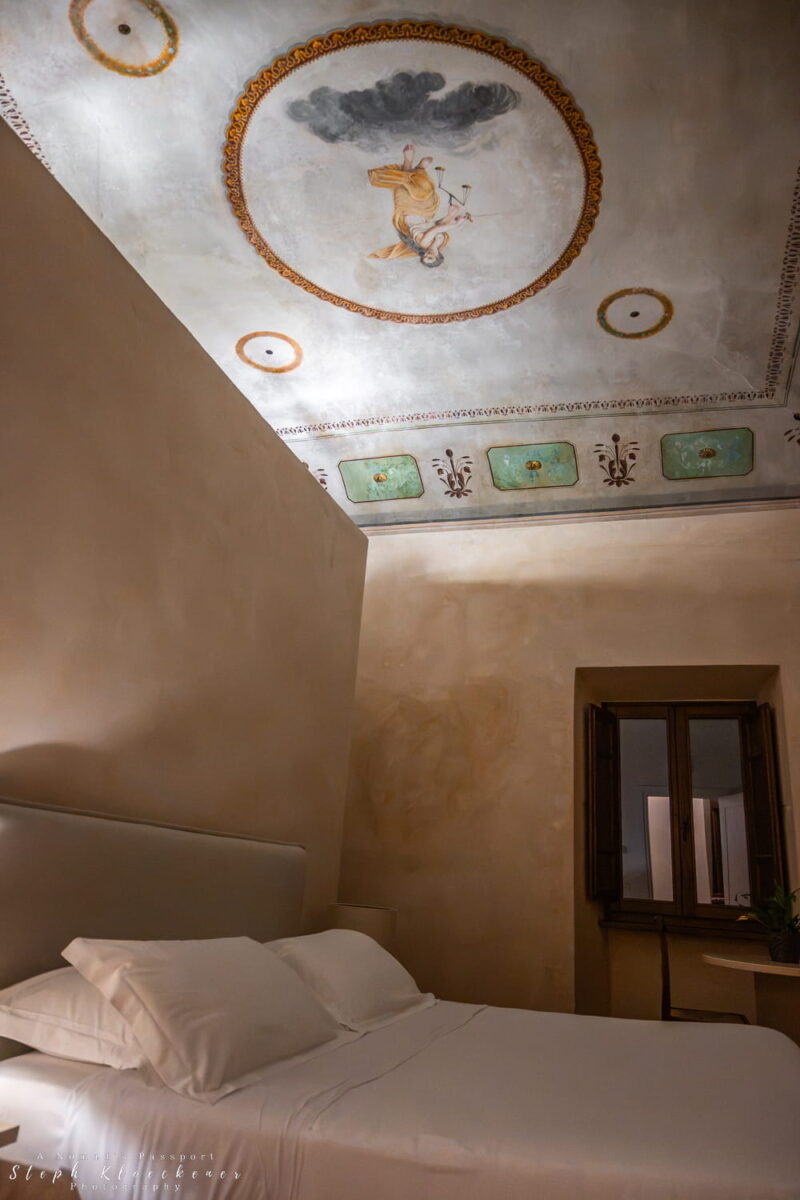
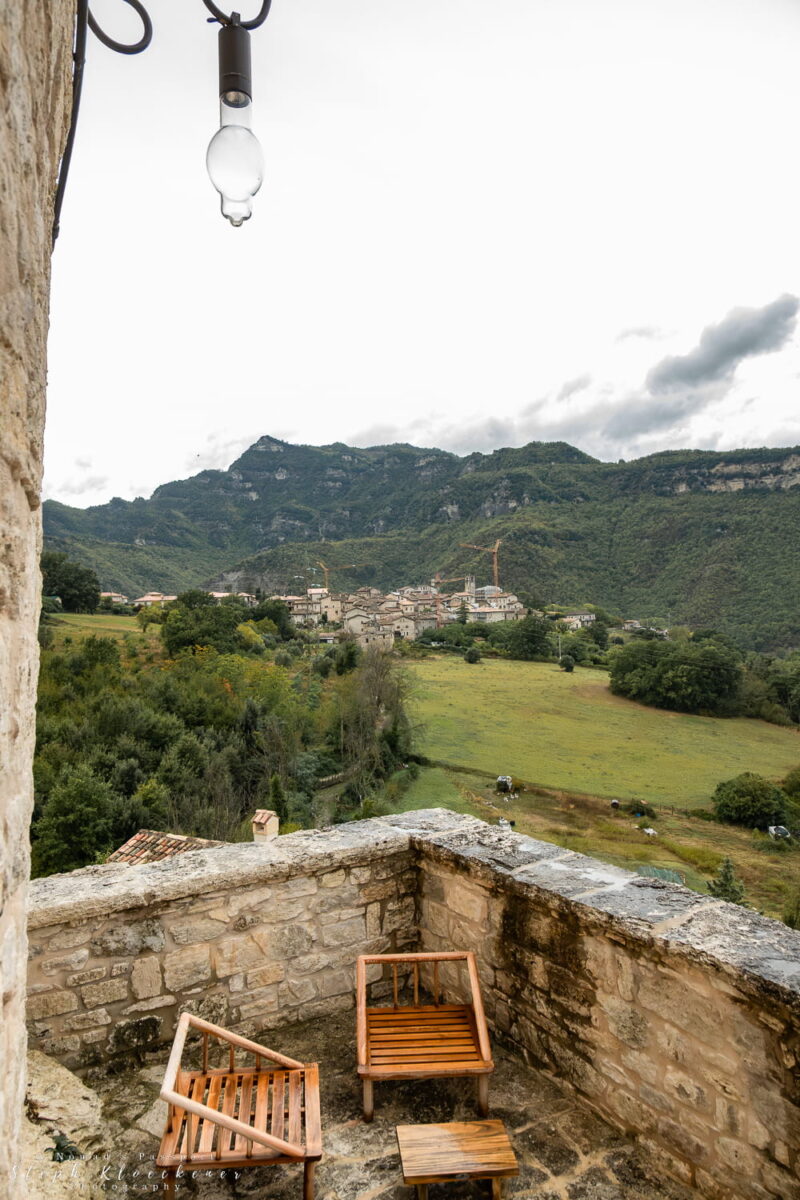
Thanks to the castle’s elevated position on a travertine outcropping, the rooms offer a panoramic view of the nearby village and the lush green valley, which is framed by the mountains. However, it also means that you will have to walk up steps carved into the rock to reach the castle. Thankfully, you do not have to carry up your luggage, as a small monorail has been installed to carry up heavy items. Instead, you can focus on trying to spot ‘Heidi’, a wild goat that lives on the rock outcropping.
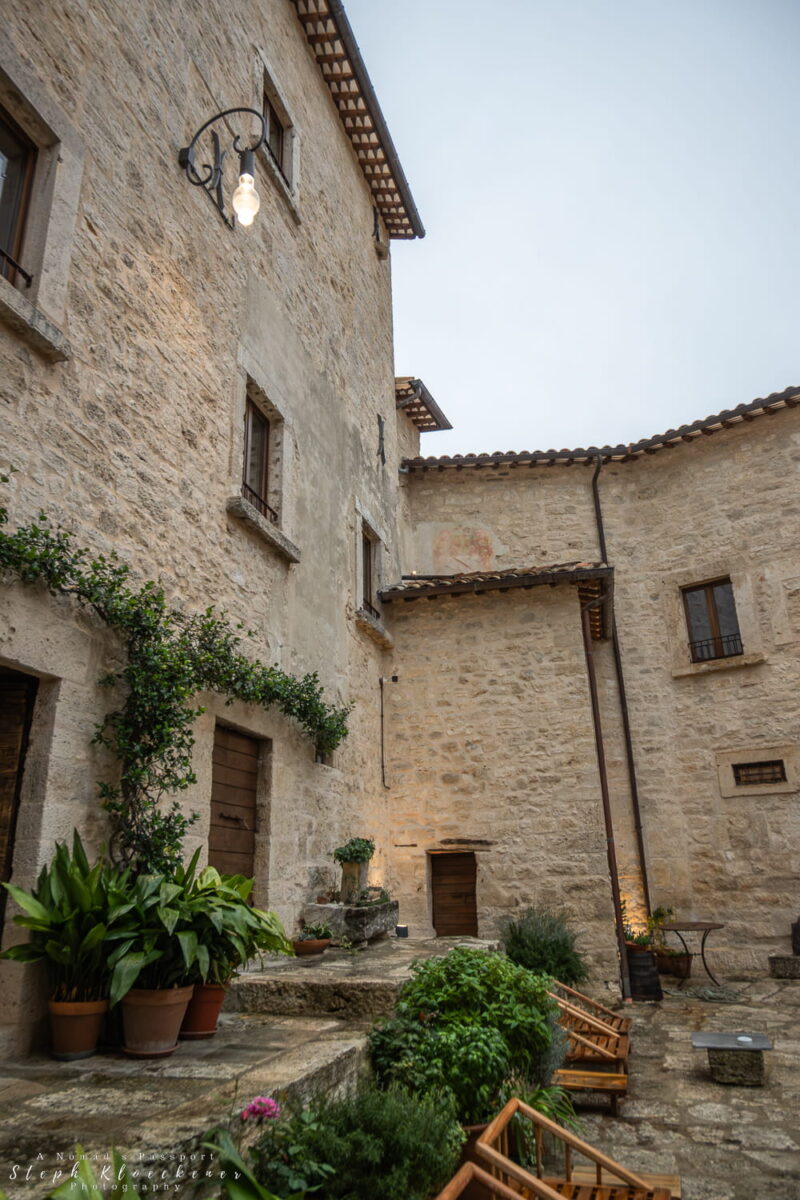
Despite the size of the castle, it only has 9 rooms that can accommodate a maximum of 23 people. As such, you nearly have the castle for yourself, and roaming the common areas, with their frescos, historic documents, and paintings, feels like a private museum visit. Thanks to this, the castle is not just a place to stay, but also a sight in itself.
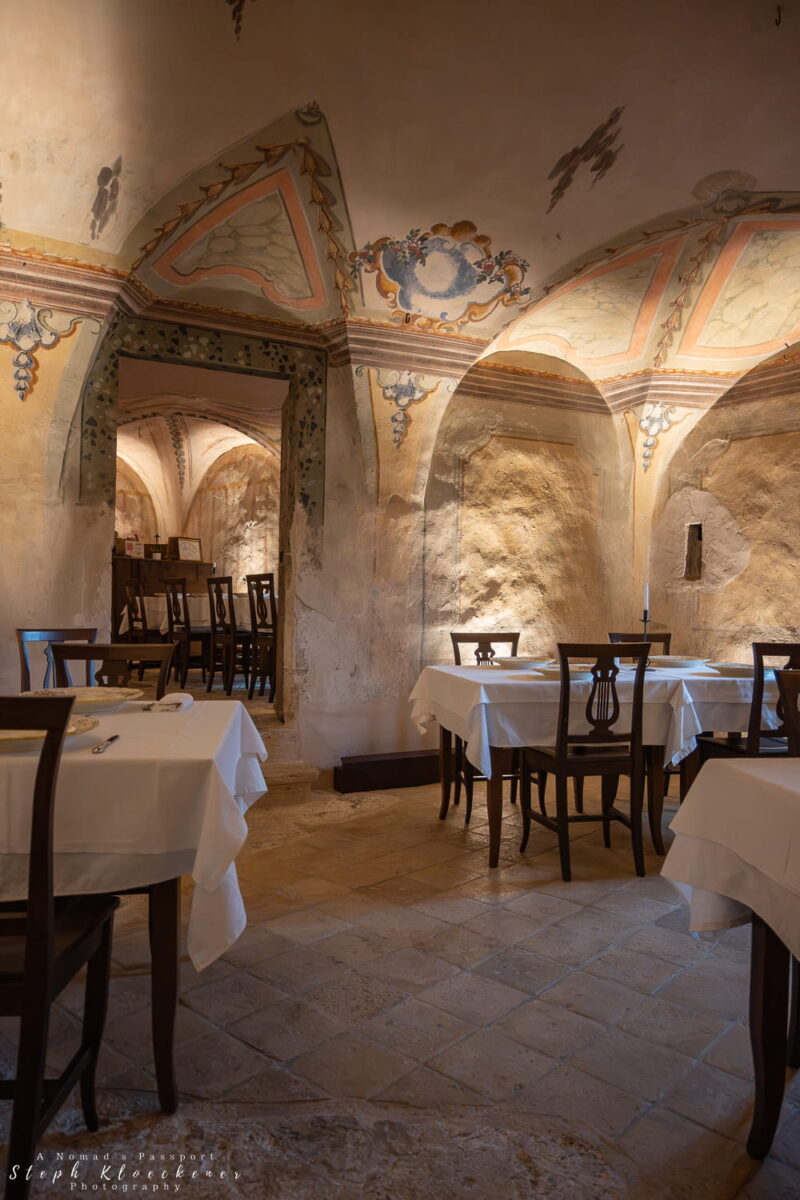
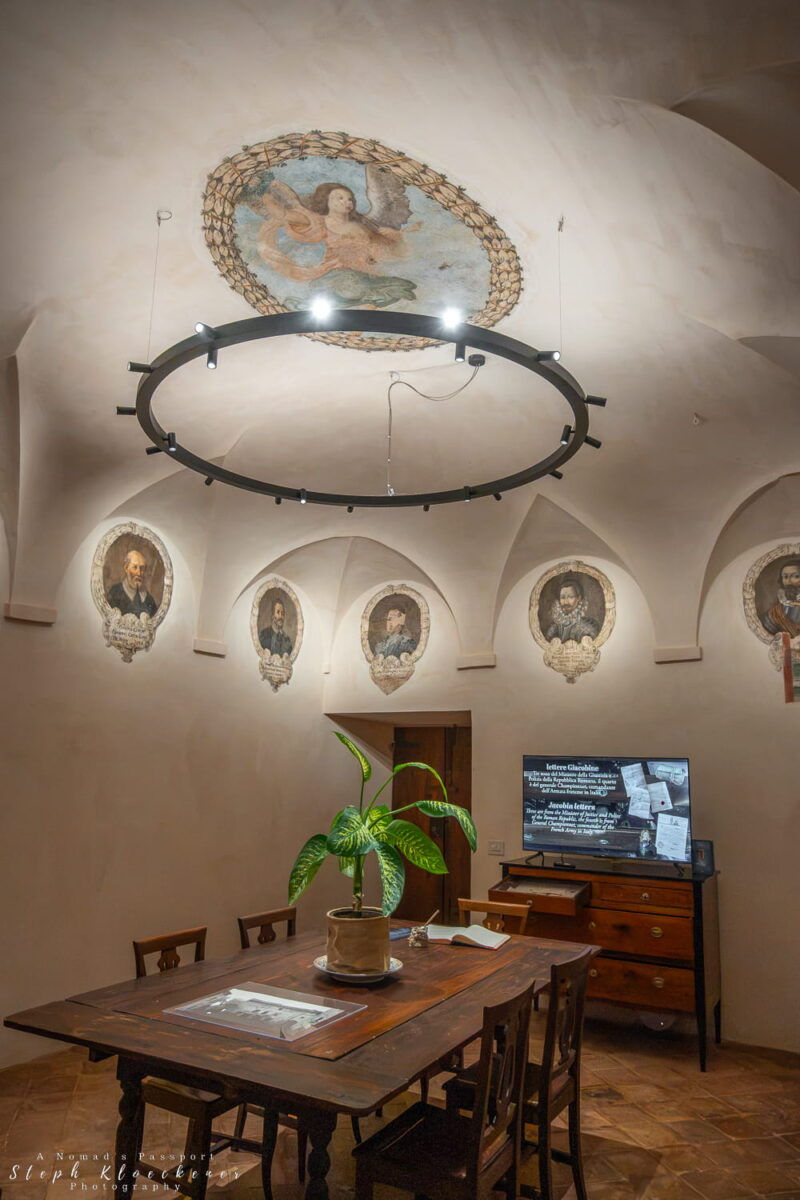
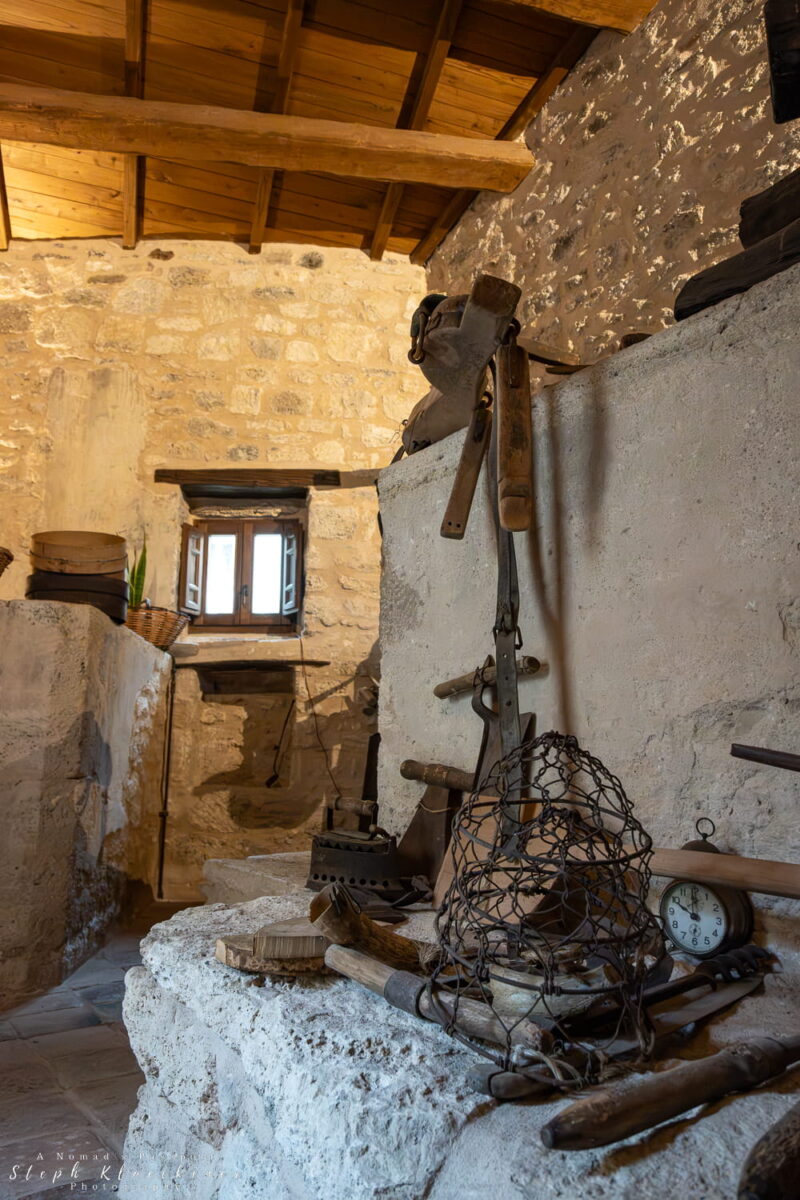
If you want to learn more about the history of the castle, you can join the castle tour, which includes the vincotto cellar and production room, as well as the castle prison. The guided tour usually starts at 6:30 PM. Thanks to this timing, you should have plenty of time to check in and get situated in your rooms. You will not want to miss out on this tour as the castle owner points out so many small details you would otherwise miss like historic grain records written on walls.
On some evenings, there are also tasting events during which you can try local products while learning about their history. Be sure to inquire if there is a tasting during your stay.
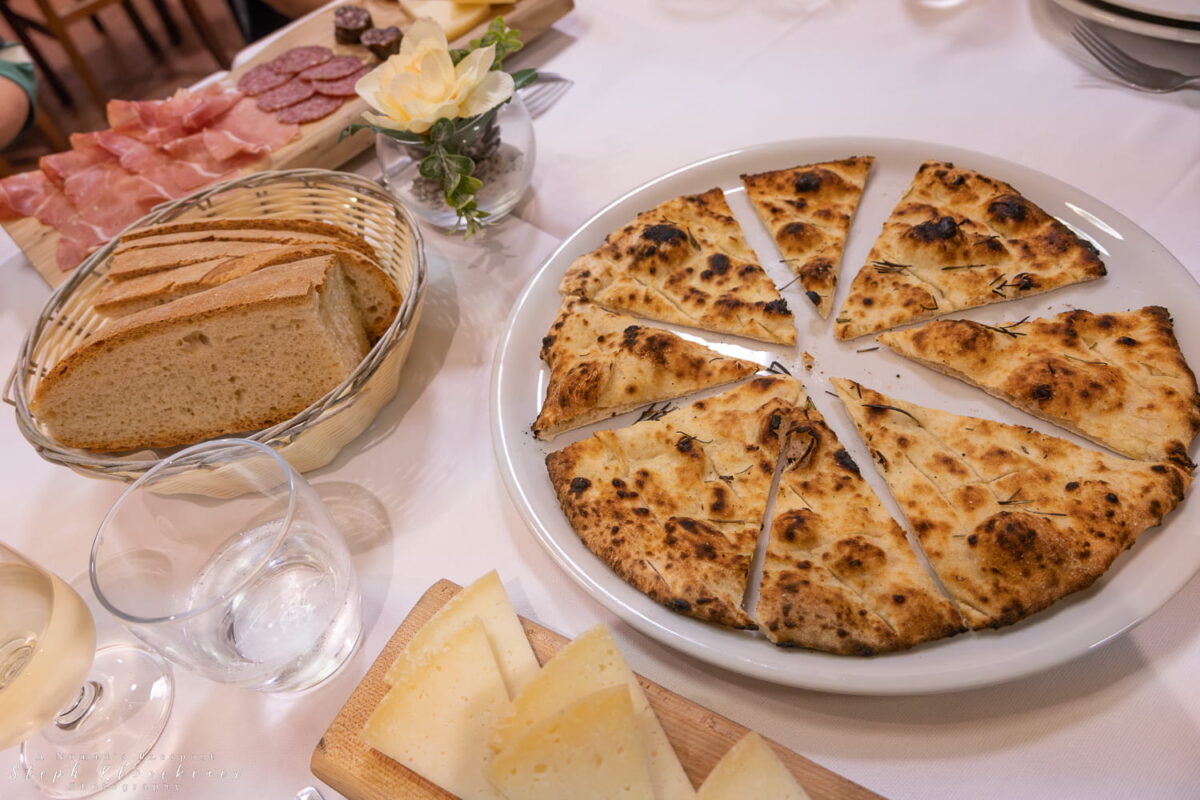
The castle restaurant is only open on Saturday, but on other days, the owners offer transfers to nearby restaurants. The nearby traditional restaurant Agriturismo Il Roccolo is one of your options, and having eaten there, I can only recommend it.
Here, every meal is treated like a feast and you can eat many regional specialties. There is no fixed menu, so you can customize your meal based on your preferences and what is in season.
If you want a first taste of Ascoli Piceno’s cuisine, you should order olive ascolane (large deep-fried and meat-filled olives), fritto misto (fried food), and arrosticini (meat skewers).
After returning to the castle, you can end the day by enjoying a glass of local wine while sitting in the castle courtyard.
Day 2: Acquasanta Terme & Roccafluvione
Enjoy a long breakfast consisting of fresh bread with spreads, homemade cakes, and local juice in the frescoed dining hall of Castel di Luco, before checking out and loading your luggage into your car.
Hamlets of Acquasanta
Then, it is time for a short walk along the Trame di Travertino. The path begins at the foot of the castle and leads to the small village of Paggese. Along the way, you will encounter a historic fountain as well as several travertine sculptures, including one of Sibilla, a sorceress you will be learning more about while in Ascoli Piceno.
Once in Paggese, spend some time strolling through the streets. Thanks to the significant amount of houses built from travertine, some of which bear carved epigraphs, the hamlet is also known as the village of ‘talking stones’, as these carved inscriptions tell their stories to this day.
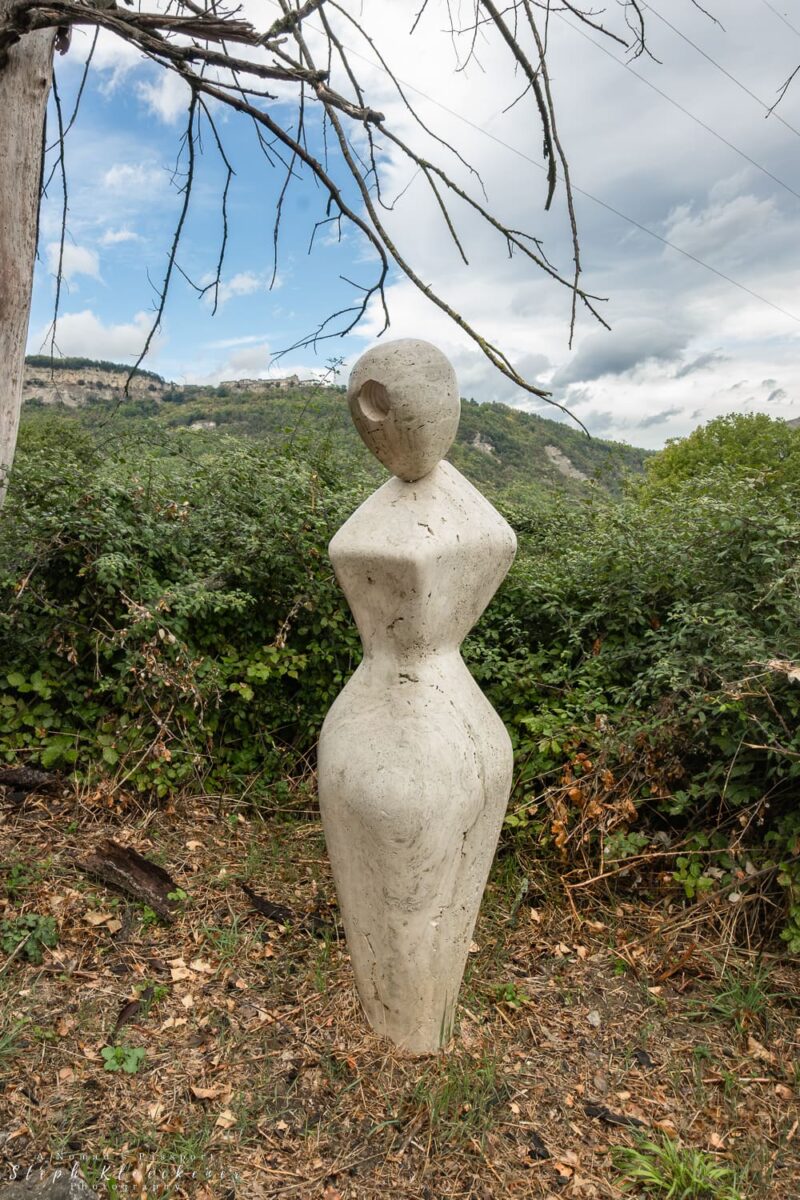
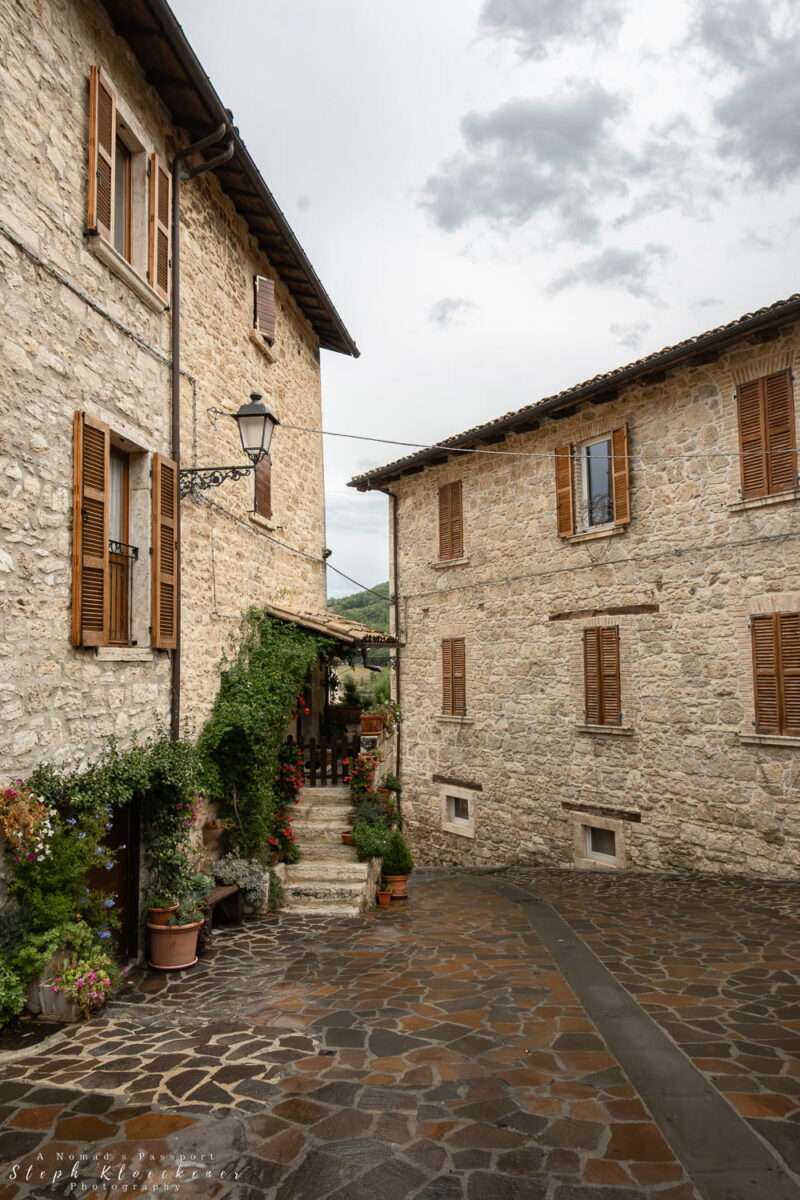
During my own visit, I was lucky enough to get a brief impression of the craftsmanship behind all the worked travertine at Poli Marmi. The owner, Annibale Poli, contributed to the reconstruction of Castel di Luco, and visiting his workshop made me pay attention to the porous structure of the stone that sets it apart from other materials.
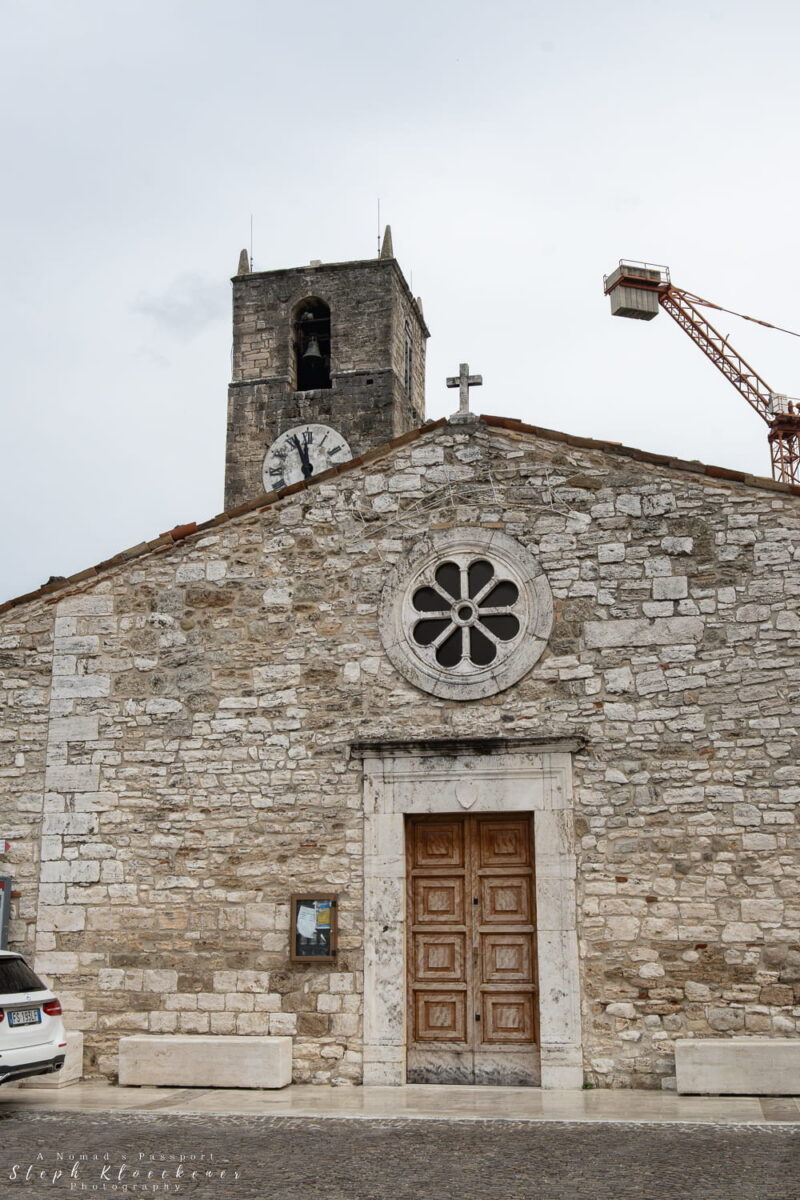
Be sure to stop by Chiesa di San Lorenzo while in Paggese. The small church dates back to 1275 and was expanded over the course of the centuries. Inside the church, you will find a Renaissance altarpiece created by Pietro Alemanno.
Head back to Castel di Luco, and then drive to Santa Maria, another hamlet of Acquasanta. Here, you can visit some of the thermal springs that gave Acquasanta its name, which translates to ‘holy water’.
The Romans have been using the Lu Vurghe sulfurous springs to cure ailments since 50 AD. And while the steep path down into the gorge the springs are located in has been improved in recent years, you are still walking in the footsteps of Roman legionaries.
As you get closer to the springs, a mild scent of eggs fills the air due to the sulfur. However, you will quickly forget about it once you see the natural beauty of the hot springs right at the shore of the Tronto river. Despite being close to Santa Maria, it feels like a remote natural retreat.
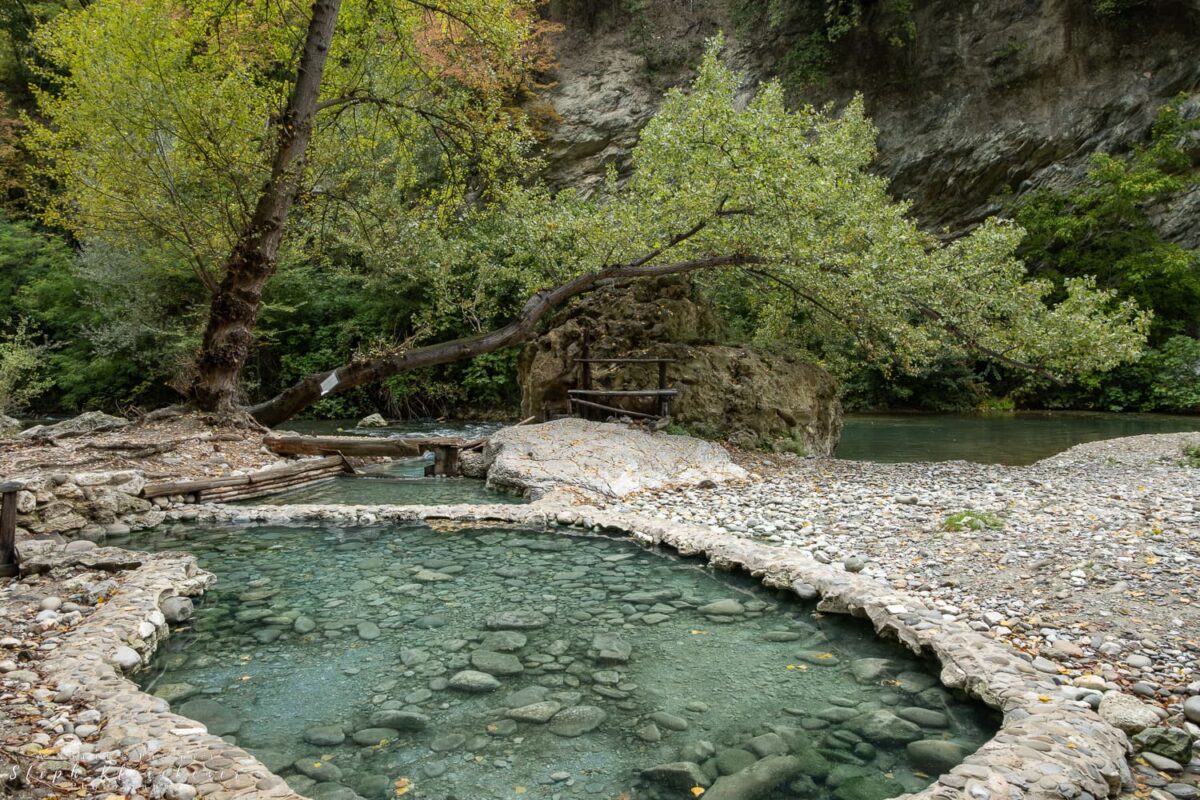
At these springs, the water emerges from the earth year-round at 30°C, and several stone-lined pools invite you to take a dip and relax in the warm water. As such, you will want to bring swimwear and a towel.
Roccafluvione
Afterward, it is time to leave Acquasanta Terme behind and to head to Roccafluvione. Known as the town of ‘black gold’ and ‘red gold’ thanks to the truffles and saffron that are cultivated here, it is the place to go for some of the most flavorful culinary experiences in the Ascoli Piceno province.
As such, your first stop is Il Vecchio Mulino Ristorante for lunch. The restaurant is well known for its use of fresh truffles, so you can expect a dish that allows you to taste the full flavors of the town’s ‘black gold’. I ate an incredibly delicious panna cotta with truffles as a dessert, and while it is not on the menu, you should ask if they would be kind enough to make it for you.


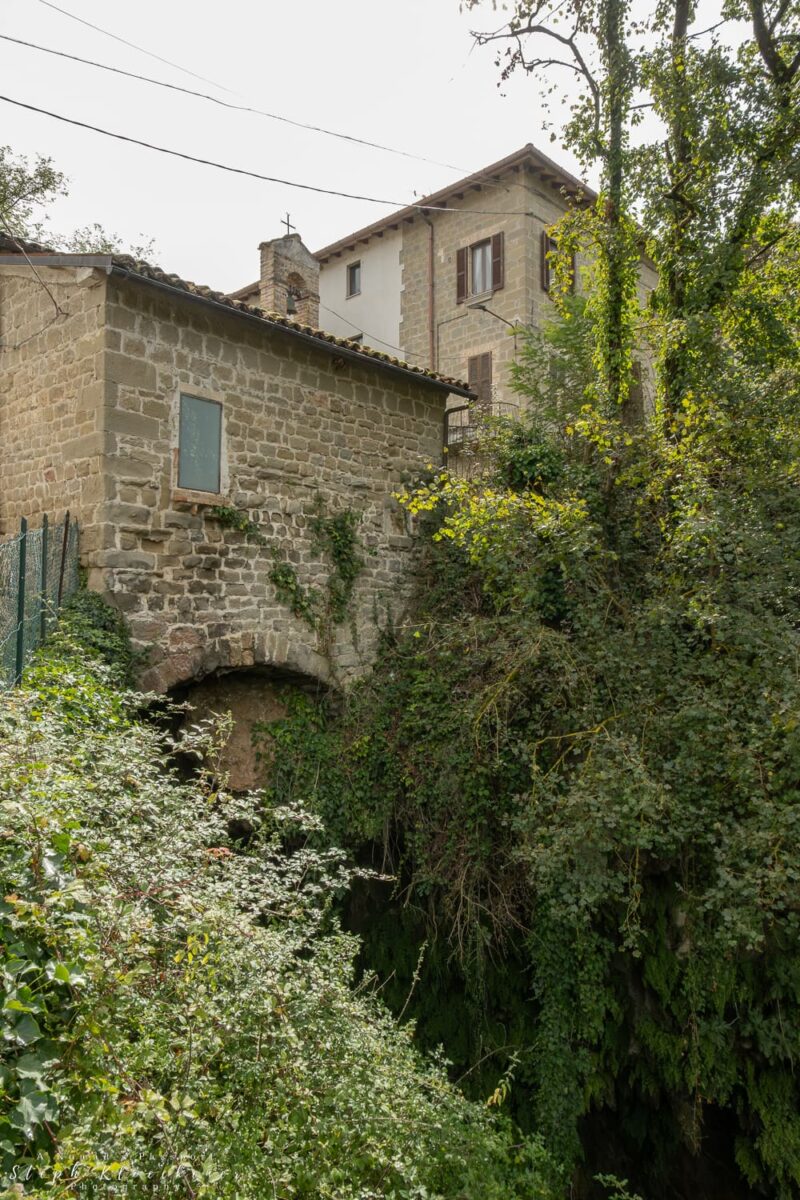
Once you have eaten, head towards Ponte Nativo, a natural bridge that crosses the Fluvione torrent. In Roman times, it was often used to cross the river without having to use the nearby Via Salaria, the Roman road that connected Rome and the Adriatic coast. Legend has it that a treasure lies hidden underneath the bridge.
Three centuries ago, a small church was constructed on the natural bridge, but if you walk around, you can still see the natural formation that spans over the deep gorge.
Just next to the Ponte Nativo, Roccafluvione’s next culinary experience awaits you at Zafferano Ponte Nativo. By prior arrangement, you can take part in a saffron tasting while learning more about the most expensive spice in the world. In autumn, you will also visit the small field where the saffron flowers bloom. It is a tasty experience that will make you understand why saffron is so expensive, and how it ended up being cultivated in this small mountain town.
Make another brief stop at the town’s fountain that is fed by a natural spring, and then head to Agriturismo Tenuta Borgio in the late afternoon.
Where to stay: Agriturismo Tenuta Borgio
Agriturismo Tenuta Borgio, just outside of Venarotta, is the ideal accommodation for the following two nights. The old farmhouse has been lovingly restored and converted into a B&B with a very peaceful atmosphere.
Alongside modern furnishings, the guest rooms also feature historic pieces that belonged to the owner’s family, giving your stay a historic touch. The common areas are decorated with colorful paintings, and the fireplace invites you to linger and read a book.
The farmhouse itself is surrounded by oak truffle trees, olive trees, and fruit trees, and some of the rooms offer a lovely view of the tree-covered hills.
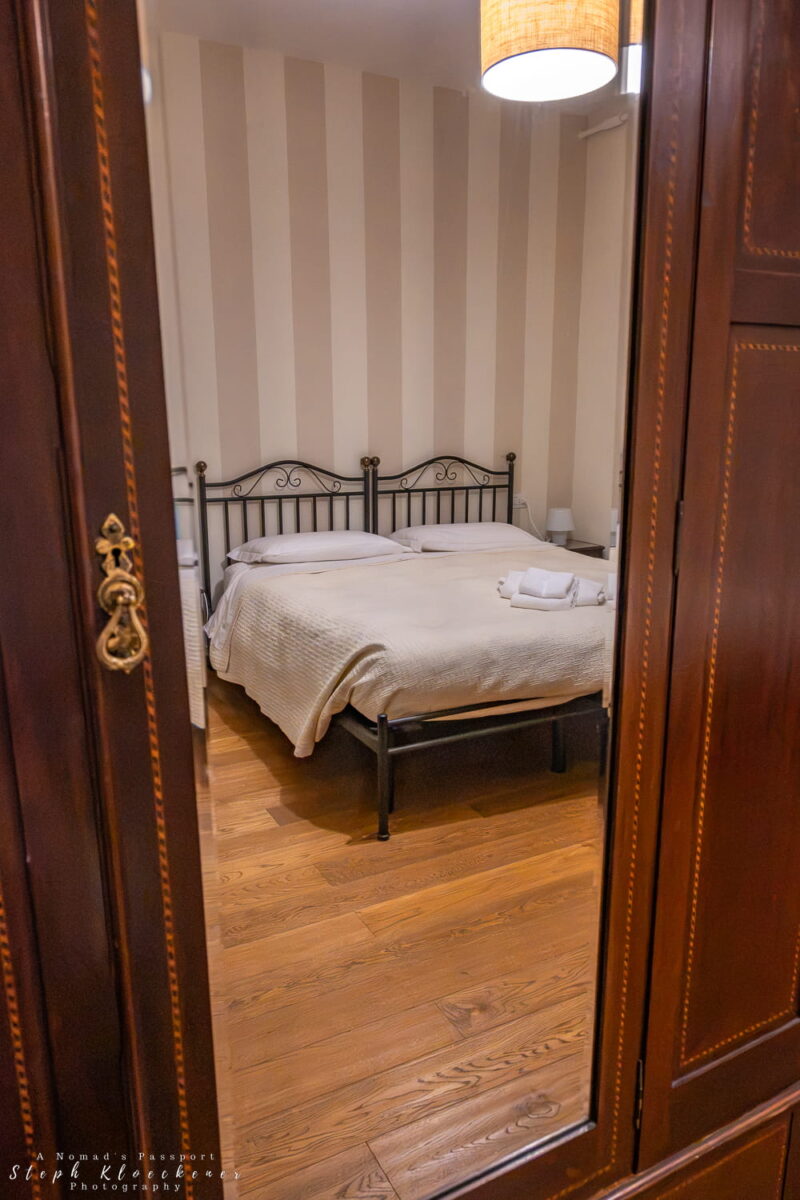
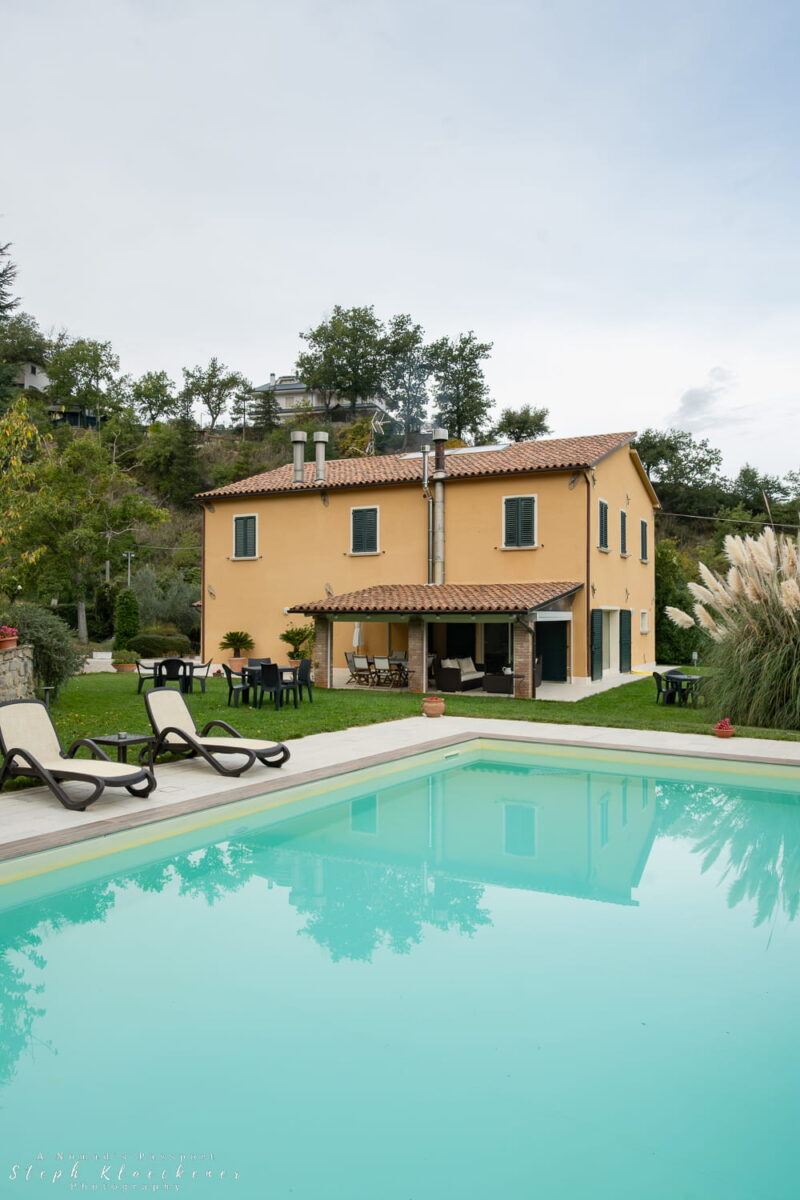
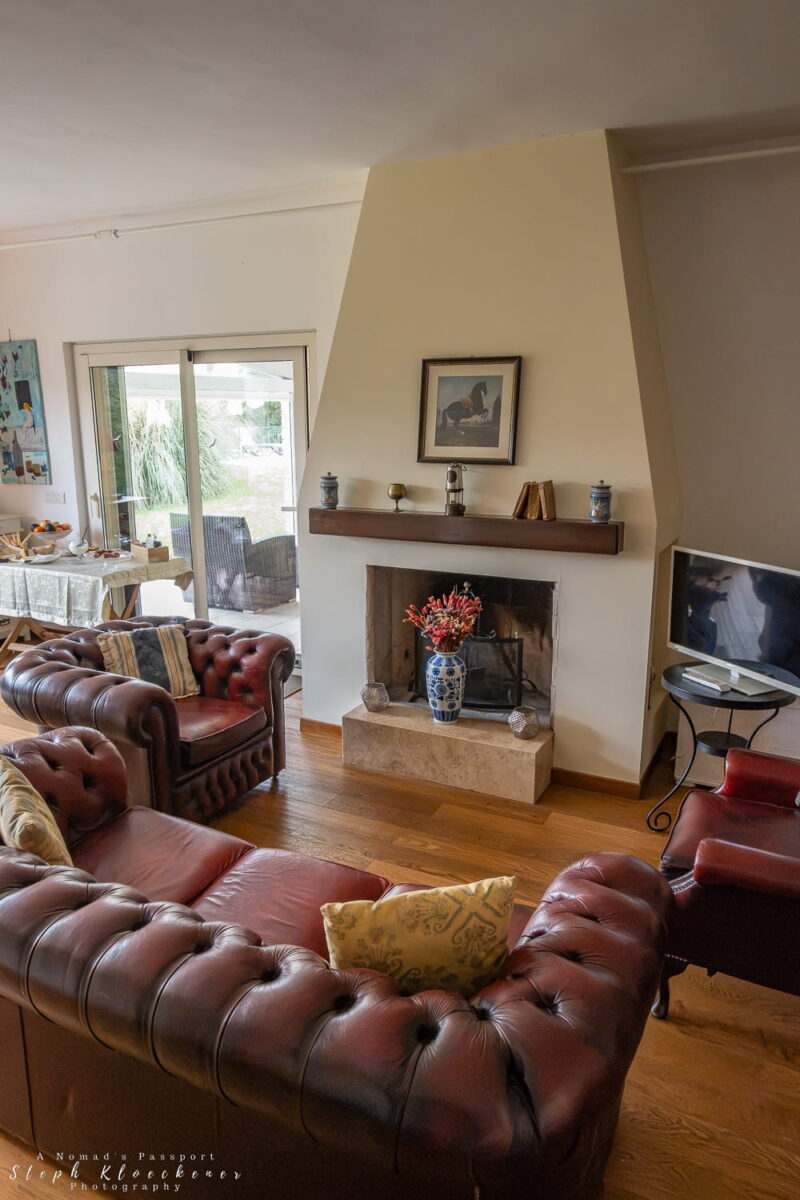
After a day of exploring the Ascoli Piceno province, you can spend your evening drinking a glass of local wine on the covered terrace, or go for a swim in the pool.
A delicious breakfast is included in your stay, complete with cake baked by the owner, Rosella. Said cake was rather delicious, so be sure to eat a slice.
You cannot eat dinner at the farmhouse, but LOCANDA Anno Mille is only a short drive away. Alongside classic Italian dishes, the menu features local specialties and Roman pinsa.
Day 3: Montemonaco & Venarotta
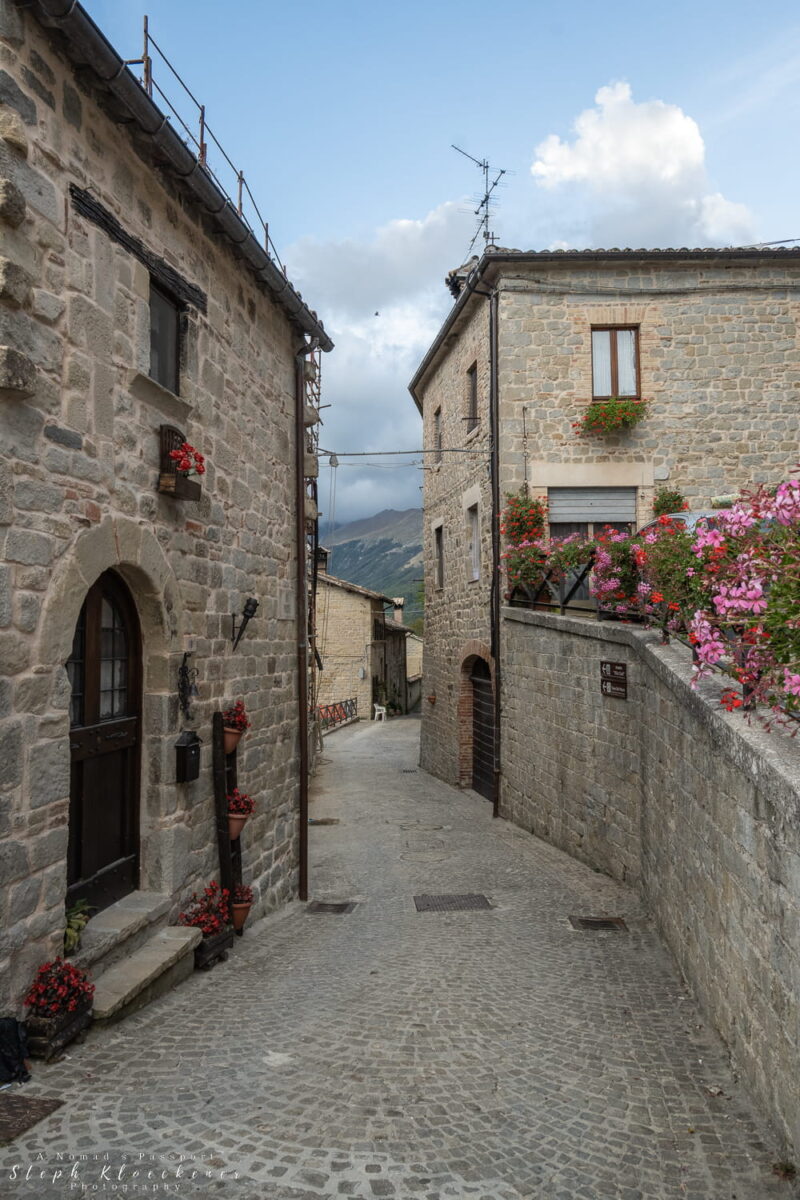
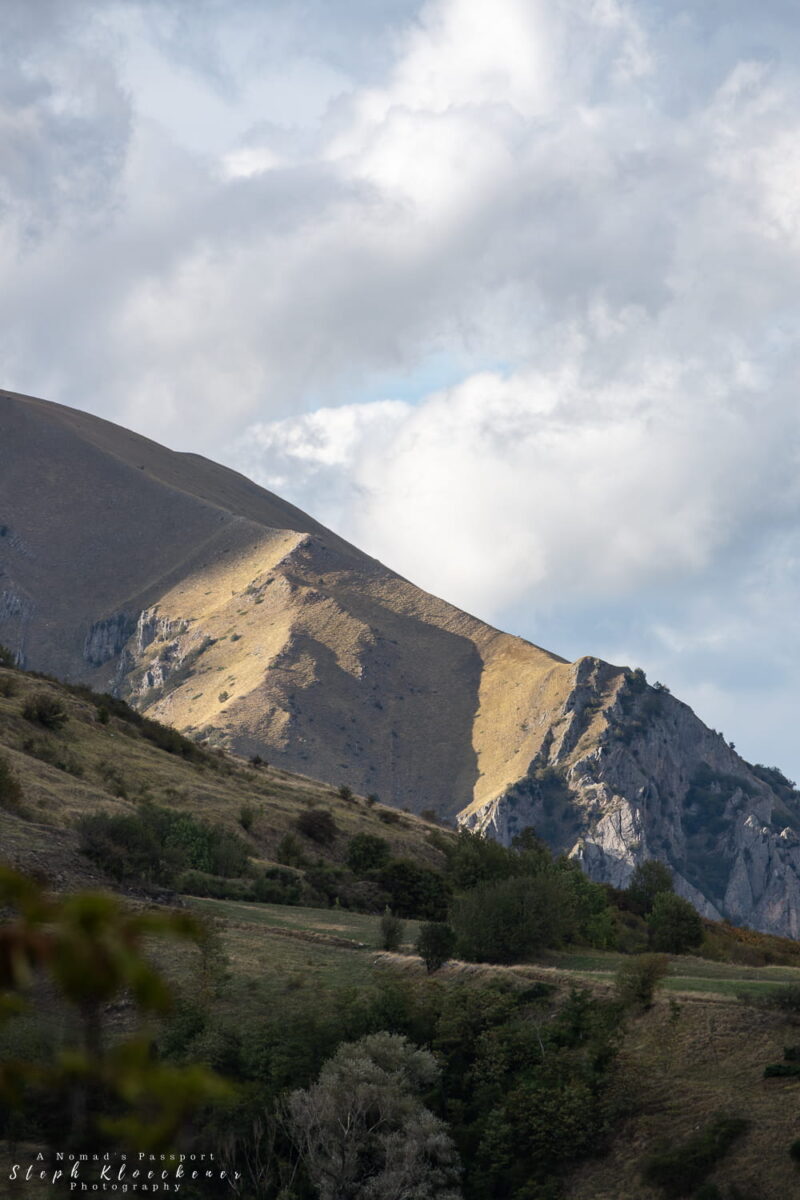
Day 3 in the Ascoli Piceno province has you dive into the folklore in Montemonaco. Founded between the 9th and 10th centuries as a Benedictine garrison, this mountain village lies at an altitude of 988 meters and offers scenic vistas of the nearby Sibillini Mountains.
The mountain range, with peaks up to 2,500 meters high, is a place shrouded in myths and legends that were once widely known in large parts of the continent. It is said that the Apennine Sibyl, a sorceress who could predict the future, lived in a cave on Monte Sibilla. There are countless tales about her underground kingdom, which could be accessed through the cave, and the temptations that awaited those who ventured there to seek Sibyl’s wisdom.
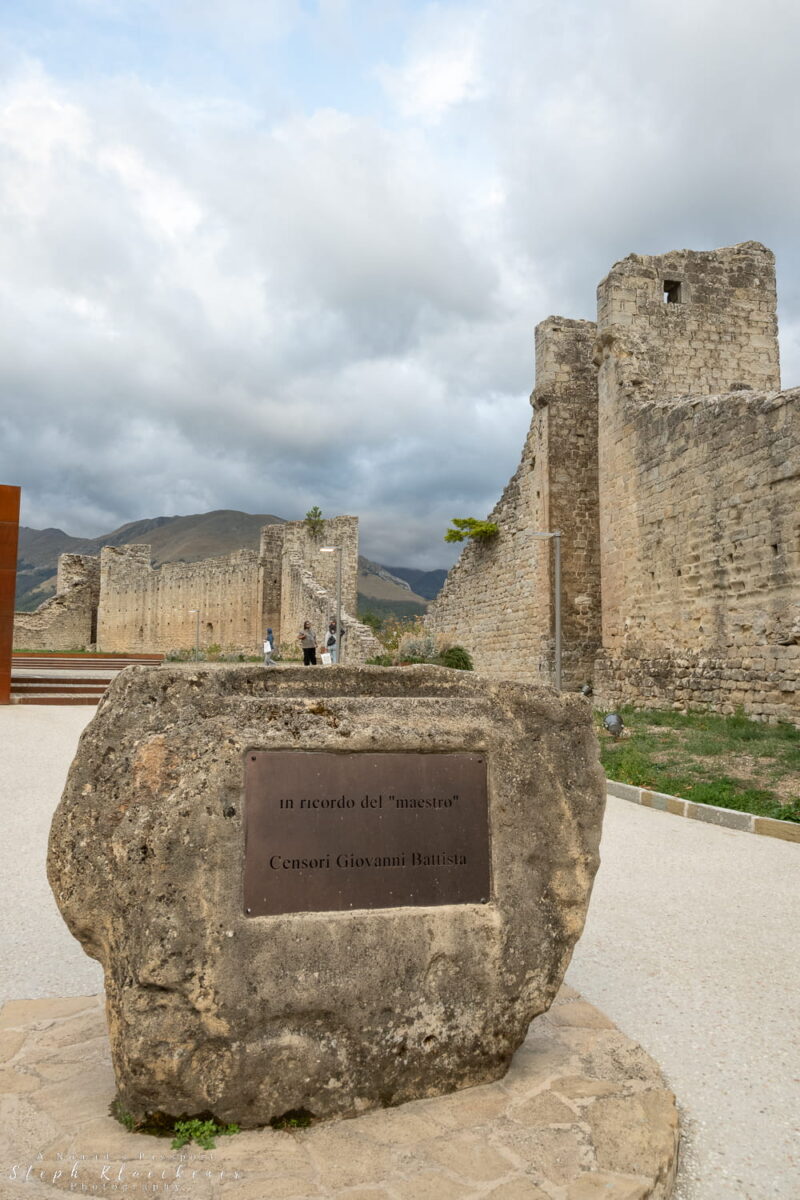
I recommend visiting the Sibyl’s Cave Museum upon arrival in Montemonaco so you can learn more about the medieval legends that once made the town famous for its pagan rites. Afterward, stroll through the streets and explore Bosco dei Mazzamurelli before heading to Piazzale Don Ameche, where you will find remains of the town’s 13th-century garrison walls and towers.
If you are visiting Montemonaco on the weekend, you will want to eat lunch a short drive away from the town at Azienda Agricola Montagnoli. The small restaurant is incredibly popular, so you should reserve a table to ensure you get to eat Rita’s artisan pasta.
Once you have eaten, you can go on a short hike in the Sibillini Mountains. You likely won’t have the time to hike all the way to the collapsed entrance of Sibyl’s Cave, but even hiking just a section of the trail lets you soak in the mythical scenery.
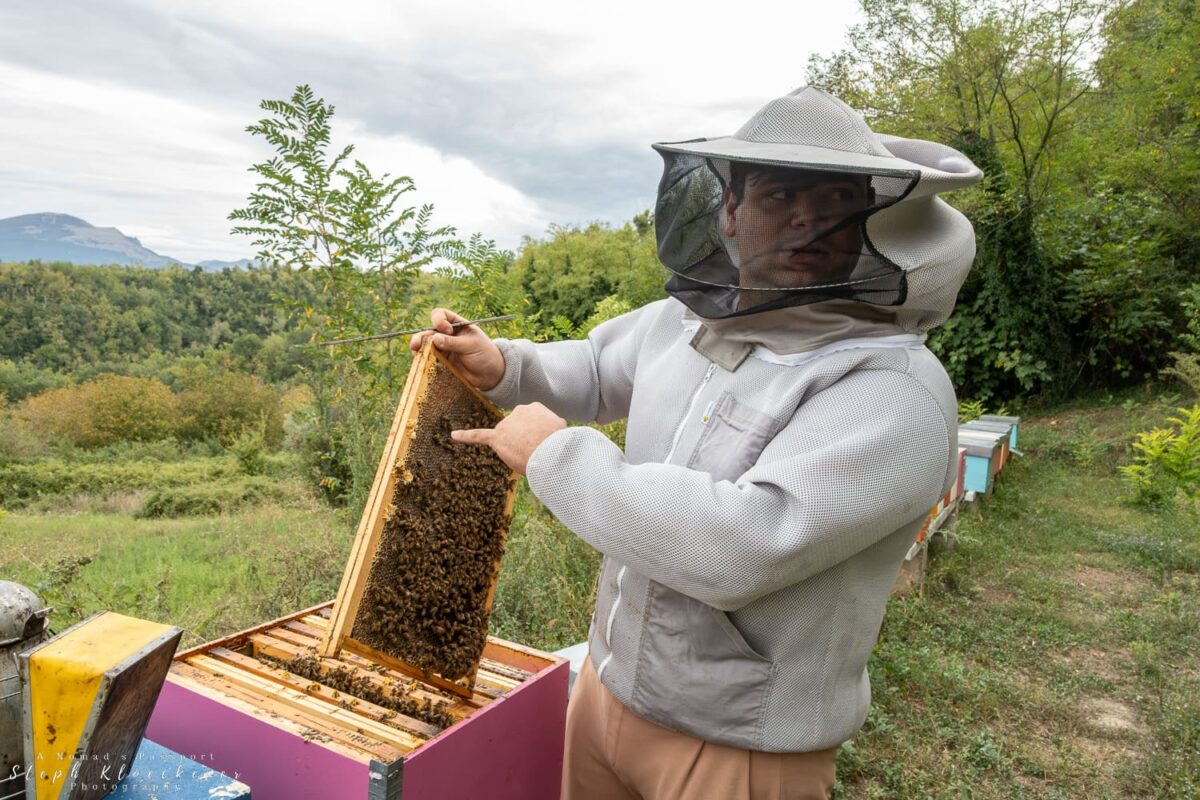
After spending some time in the mountains, drive to Clorinda Caucci Sabatini Farm in the outskirts of Venarotta. Depending on the season, the small farm offers aviary visits and the chance to witness the olive harvest.
While there, we had the chance to sample the different honeys, and it was fascinating to taste how much the flavor changes based on where the beehives are placed. I loved the mild, flowery Acacia honey and ended up buying a glass as a souvenir.
By prior appointment, you can visit the aviary from May to mid-September, while the olive harvest takes place from mid-September to mid-November.
Depending on the time of day, you can spend some time exploring Venarotta itself or head right back to Agriturismo Tenuta Borgio.
Day 4: Force
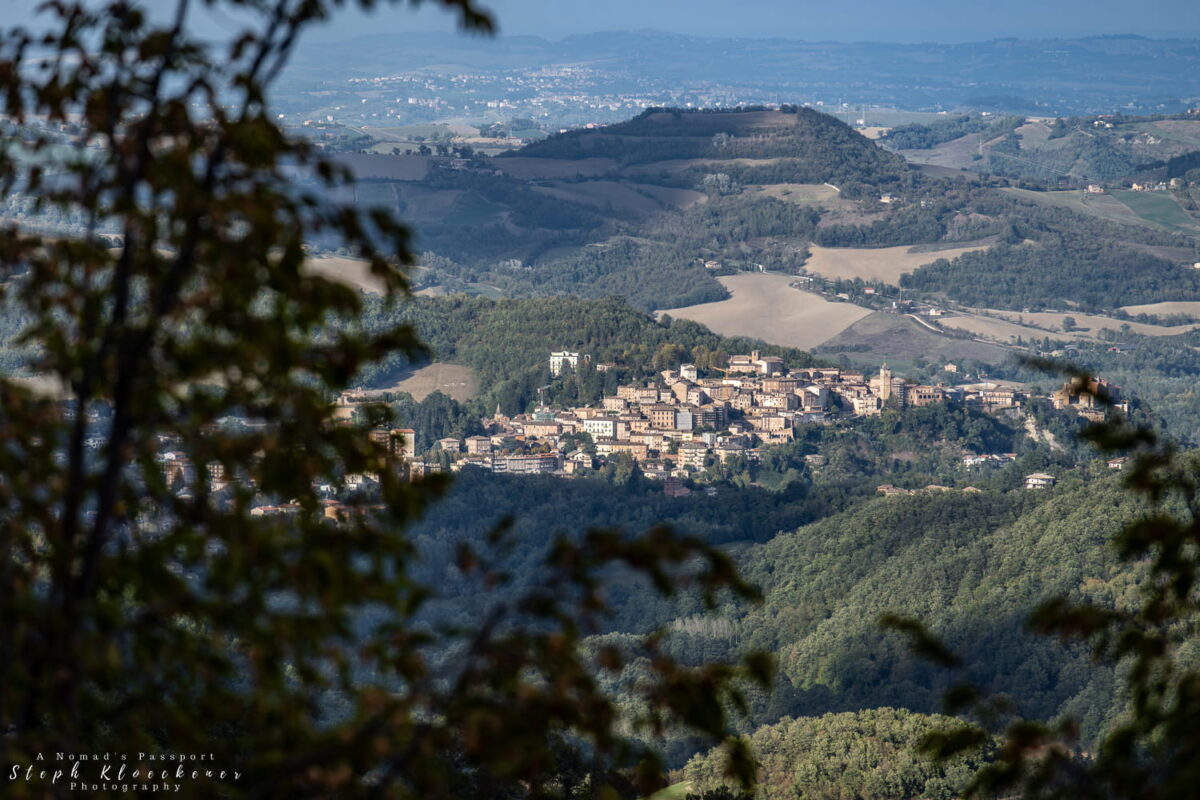
Have a relaxed start to the day with a long breakfast, before driving to Force, the final stop of this Ascoli Piceno itinerary. The fortified medieval town is located on a ridge between the Aso, Tronto, and Tesino valleys, and offers panoramic views of the surrounding hills and the Sibillini mountains.
Upon arrival, make a short stop at Villino Verrucci outside of the city walls. The Art Nouveau-style villa was designed by Ernesto Verrucci Bey, an internationally renowned architect from Force. Its turret is designed to resemble that of the royal palace of Montaza in Egypt, setting it apart from Force’s other historic buildings.
Afterward, enter the fortified area of Force, where you will find the Coppersmith Museum. This museum also doubles as a workshop, and allows you to learn more about the traditional handwork that is a core part of the town’s identity. The history of the craft can be traced back to the early 17th century, with some evidence pointing to an even earlier origin. Spend some time observing craftsmen working copper with hammers and chisels, before exploring the exhibition area of the museum.


Right next to the Coppersmith Museum, Force’s Sistine Museum of Sacral Art awaits you. The exhibition features valuable artworks and artifacts from local churches including 16th-century canvases depicting the ’Stories of the Childhood of Christ’ and the 11th- to 13th-century ‘Wooden Crucifix with Tunic’. The artistic skill behind these pieces makes the museum an unmissable stop even if you are not religious.
From mid-June to mid-September, both museums are open daily, but during other times of the year, they only open on reservations.
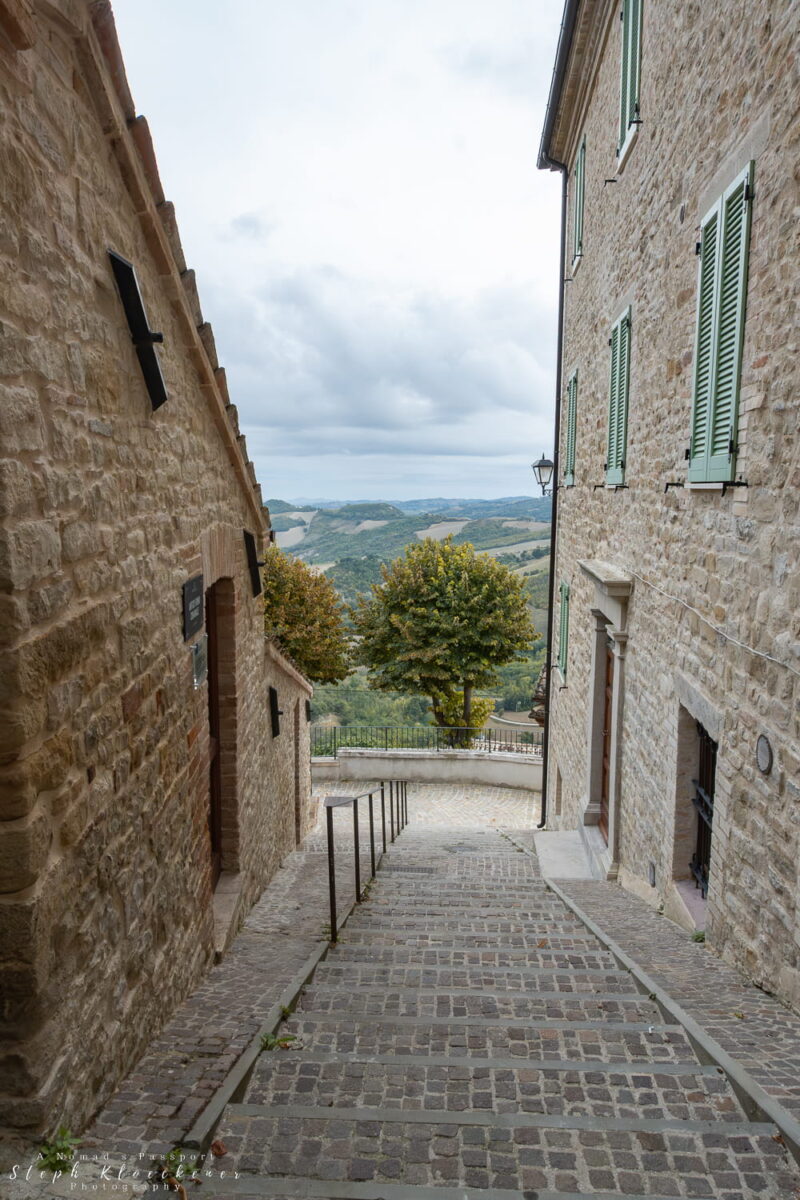
After visiting the museums, stroll through the streets towards Piazza Umberto I while keeping an eye out for post boxes that have been painted to resemble small houses. Once at the plaza, enter San Francesco Church, a Neoclassical church that now houses the “Holy Crucifix of Force,” a wood sculpture that was commissioned in 1513 and that is the key element of a local legend. It is said that it traveled upstream towards Force during a flood.
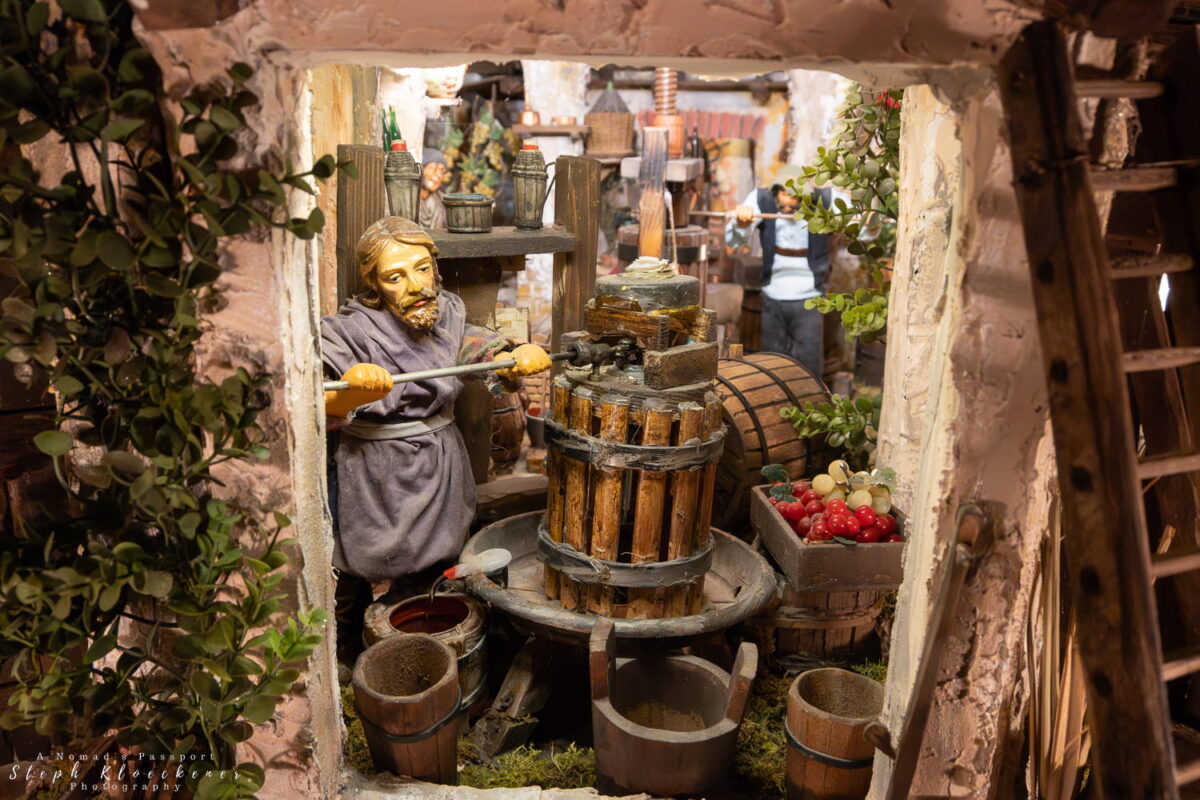
The church was constructed at the site of an old friary, and while few traces of the friary remain, the underground storage areas have been transformed into a Nativity scene that is spread over several rooms. For over 30 years, locals have been handcrafting every single piece of the Presepe Artistico, and you will want to spend a good amount of time there to take in all the small details.
Thanks to many figures and other pieces that move, the entire Nativity scene feels real, and a series of sound and light effects that create a day-and-night cycle and simulate the weather further enhance this perception.
The entire Nativity scene is such a stunning display of craftsmanship and decades of dedication that it will more than endear this town to you. As such, it is the ideal final stop of this itinerary.
Onward Journey
This Ascoli Piceno itinerary certainly makes for a great standalone trip, but if you want to spend more time in Italy, you can extend your trip by spending a few days in Ascoli Piceno, the city that gave the province its name. The city features many stunning travertine buildings and its churches are known for medieval sacred art. Be sure to try Anisetta Meletti licorice while there.
Alternatively, you can spend a few days in the coastal area so you can experience a completely different side of the province. The seaside towns Grottammare and San Benedetto del Tronto are popular options.
Getting Around in the Ascoli Piceno Province
Given that the province’s interior is a mountainous area where even the hamlets belonging to the villages are widespread, you will want a car for this itinerary. There are some, at times seasonal, bus routes, but getting around by public transport would take you significantly longer and you would have to call for a taxi quite often to get to your exact destination. As such, it is not a viable option if you want to actually explore the Ascoli Piceno province.
The Best Time to Visit the Aree Interne of Ascoli Piceno
While the Ascoli Piceno province is an intriguing destination year-round, the best time for this specific itinerary is from May to October.
In May, spring flowers start to bloom and nature comes to life as the last snow in the valley melts. The daytime temperature is pleasant, but it gets a bit chilly at night or at altitude, so you will want to bring a jacket.
The summer months from June to August see sunny days and the regional museums are open daily. As such, you do not have to pre-arrange your museum visits. Just be sure to book your accommodation at least a month or two in advance, as some of the most charming places to stay in the region will likely be fully booked.
If you want to experience the culinary side of the mountainous areas of the Ascoli Piceno province, then autumn is ideal. It is when you can enjoy freshly harvested and gathered products like truffles, chestnuts, and olives, and you can even witness the harvest itself.
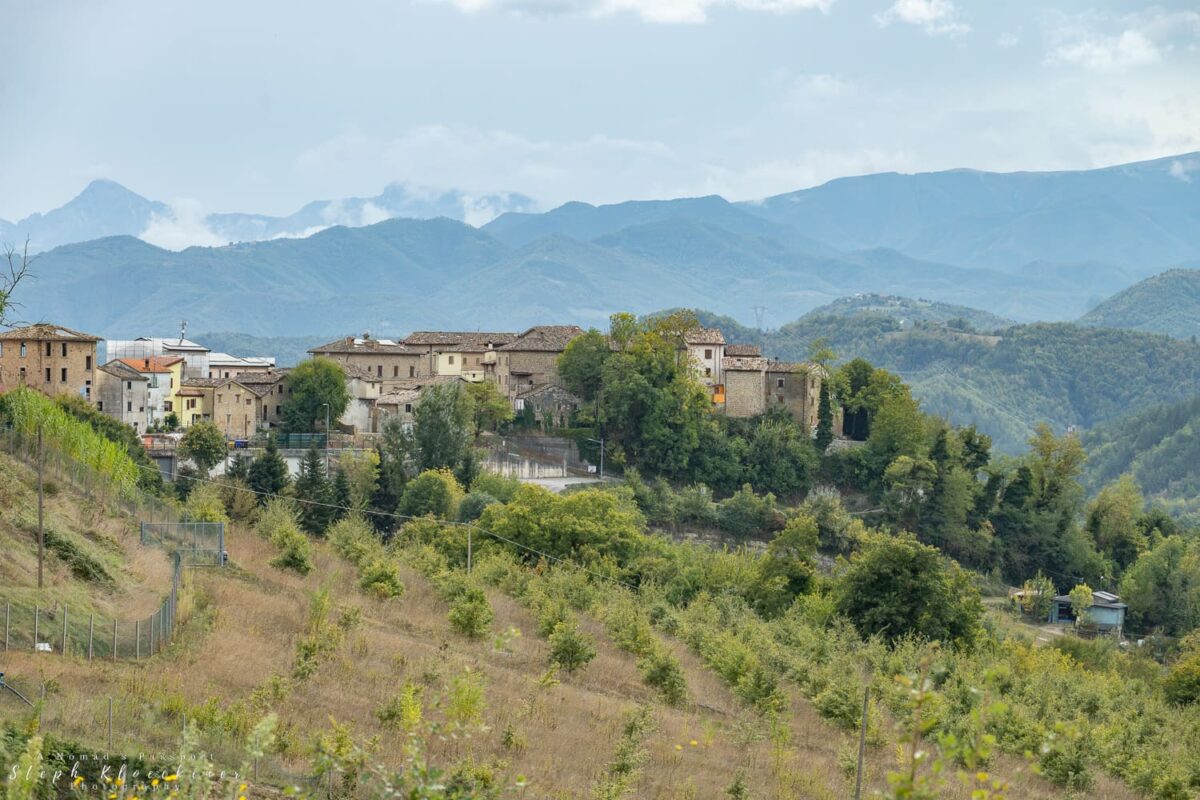
It is also the time of the year when many culinary festivals take place. Among them is the Autumn Festival in Acquasanta in late October, during which you can taste the flavors of chestnuts, mushrooms, truffles, and walnuts found in the surrounding forests.
Palmiano’s Sagra della Patata (Potato Festival) takes place at the end of August and on the first Sunday of September, and is a unique chance to eat delicious potato products made from the white mountain potatoes that grow in the area.
Having visited the region in autumn, I can only recommend a trip there during this time of the year. It might not always be sunny, but being there when the region’s gastronomy flourishes more than makes up for a few clouds in the sky.
Unless you want to drive on snow-covered mountain roads, winter might not be the ideal time for a trip to Ascoli Piceno’s Aree Interne. If you love truffles, you might, however, want to attend the Tartufo Nero Festival (Black Truffle Festival)in Roccafluvione in late January.
Are the Aree Interne of Ascoli Piceno worth visiting?
With its mountain landscapes, gastronomy, and medieval villages, the internal area of the Ascoli Piceno province is a vastly overlooked region of Italy that is well worth visiting. A trip here lets you experience an authentic side of the country, and as you spend your days exploring the diversity of the area, you will find yourself wondering how this beautiful part of Italy is not yet on the radar of international travelers.
Aside from the many delicious meals and gastronomic experiences, my personal highlight was staying in Castel di Luco, and as I alluded to earlier, spending a night in the castle itself makes a trip to the area worth it. For me, it was a good reminder that some of the country’s most unique experiences can be found far from popular destinations. As such, you certainly should plan a trip to the Aree Interne of Ascoli Piceno yourself.
More about Italy
If you are planning a trip the Marche region, you might also be interested in these Italy travel guides:
10 Days in Italy by Train
The Best Cities in Italy
Is there anything else you want to know about this Province?
Let me know in the comments!
Are you still Planning your trip to Ascoli Piceno, Italy?
Then Save This Article for later!