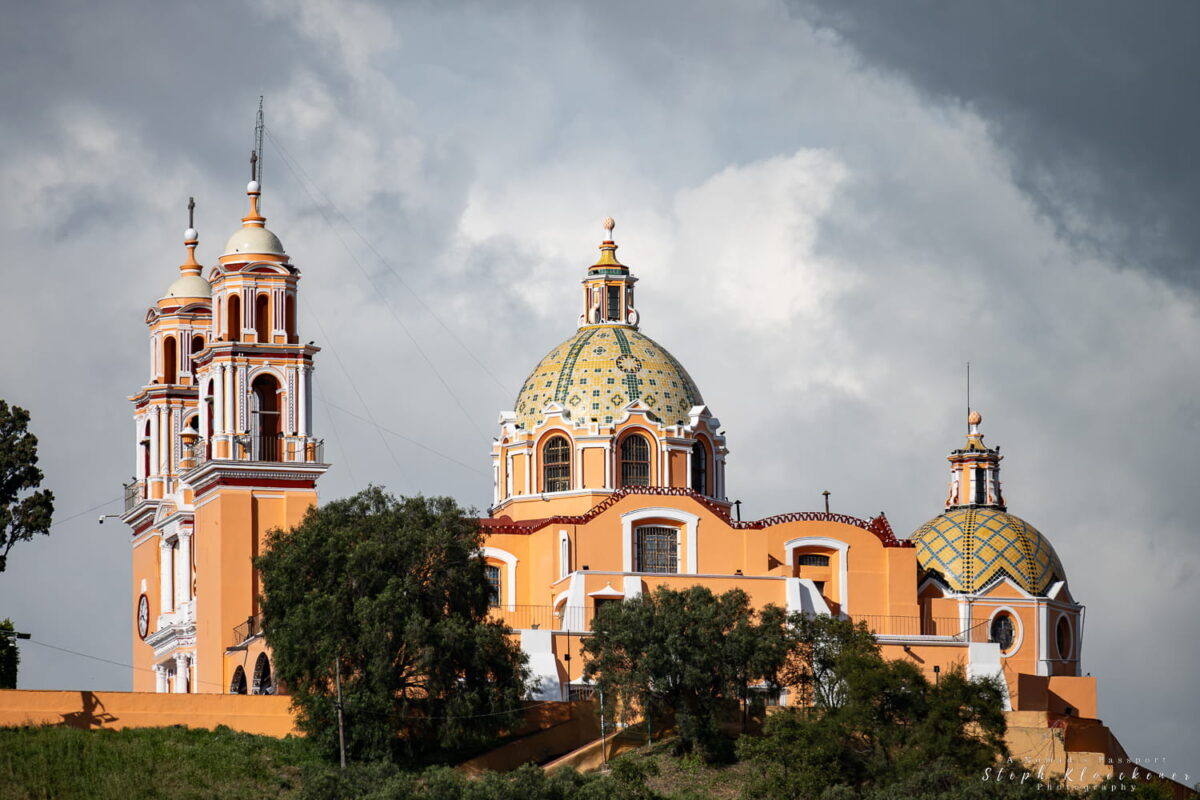
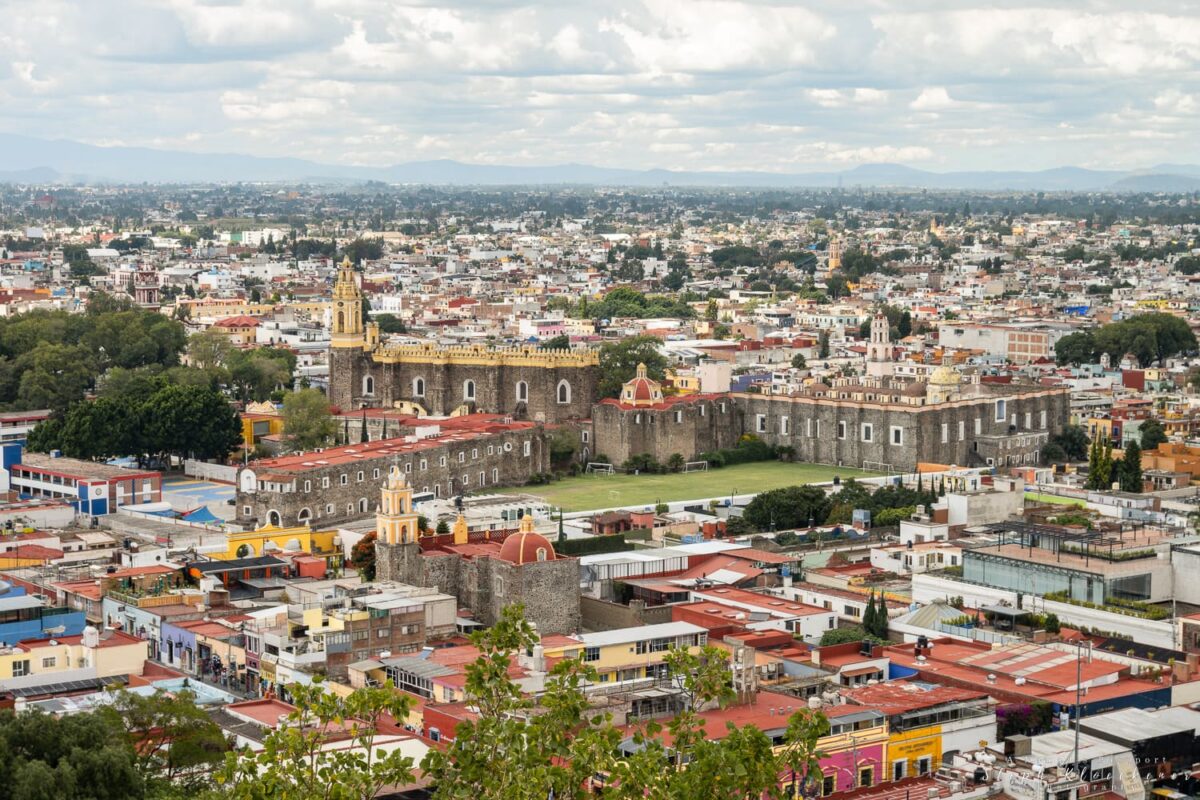
Located northwest of Puebla de Zaragoza and surrounded by some of Mexico’s highest mountains, Cholula de Rivadavia is one of Puebla’s pueblo mágicos. While it is best known for its overgrown Great Pyramid and the colonial church constructed on top of it, the town has many more intriguing sights. It is a place where different eras coexist, as the structures and buildings tell stories of the town’s past as a sacred place, the colonial time, and modern life.
Unlike the nearby Puebla, which was founded ex nihilo by the Spaniards, Cholula was founded between 1000 BC and 500 BC, which makes it the oldest continuously inhabited city in the Americas.
Today, Cholula is home to people from all over Mexico who come to live and study, and traces of the town’s long history can be found in its archeological site, churches, and colonial architecture. The town is made up of two municipalities, San Pedro Cholula and San Andrés Cholula, which merge at the Great Pyramid.
Although I was originally supposed to explore the pueblo mágico with a local tour company, I had to adjust my plans due to issues with my flights to Mexico. Thankfully, a good friend of mine lives there and offered to be my guide during my Cholula day trip. It is thanks to her that I got to see the best things to do in Cholula while also gaining a small insight into what it is like to live there. Based on my visit, I am convinced that this town is not to be missed as it is one of the highlights of Central Mexico.
This post may contain affiliate links(*), which means I may receive a commission, at no extra cost to you if you make a purchase through a link. Please see the full disclosure for further information.
How to get to Cholula
Given the close proximity of Cholula and Puebla, most travelers start their day trip in Puebla de Zaragoza, and if you plan to do so, you can choose between various options of getting there.
The cheapest option is to take bus 1 from Chachapa to Tlaxcalancingo. The service runs daily between 5 AM and 11 PM, and if you are staying near the historic center of Puebla, the closest bus stop to you should be Defensores de la República.
The most convenient way of getting to Cholula is to take an UBER. Usually, an UBER from Puebla to Cholula costs around 135 MXN.
If you want flexibility and have a rental car, you can easily drive the 12.1 km. Depending on traffic, you should get to Cholula in around 30 minutes. Hereby, the best place to park is this parking lot on Calle 6 Nte just behind Oxxo Pirámide.
Alternatively, you can also do a guided tour to Cholula. Many tour companies offer day trips that combine Cholula and Atlixco, but if you just want a tour of Cholula, I recommend this tour.
While there are train tracks, the operation of the Tren Turistico was suspended on January 1, 2022. There are plans to resume the service and to extend the line to Atlixco, but the reopening date has yet to be announced.
Once in Cholula, you can easily walk to nearly all of the main attractions in Cholula. Only Templo de Santa María Tonantzintla and San Francisco Acatepec are further away from the center, so you will want to take an UBER to the churches if you do not have a rental car.
If you want to visit Cholula from Mexico City, this guided day trip that also includes the city of Puebla is a good option.
Where to Stay
Most travelers visit Cholula as a day trip, but if you want to spend more time in the pueblo mágico so you have wander the streets, enjoy the Pueblan cuisine and browse the stores, you can choose between many great hotels situated in historic buildings.
While I did not spend a night in Cholula, I asked my friend from Cholula where her family and friends like to stay, and she highly recommended the following two hotels:
Hotel La Quinta Luna is a boutique hotel in an old hacienda-style building, and charms travelers with its courtyard and library. It has an on-site restaurant, and some of the best restaurants of San Pedro Cholula are in close proximity.
Hotel Estrella de Belem is a 19th-century mansion turned into a charming hotel only 200 m from the Great Pyramid. It features a rooftop terrace with a small pool and hot tub.
Things to Do in Cholula
Cholula might be best known for its Great Pyramid and Santuario de la Virgen de los Remedios, but like so many other destinations in the state, the town offers much more. It is a place where the local culture is reflected in the architecture of churches, and where ancient history meets modern life.
This pueblo mágico is an unmissable day trip from Puebla and there are many great things to do in Cholula.
1. Explore Cholula’s Archeological Site
With its 450 m by 450 m (1480×1480 ft) large base, a height of 54 meters, and a volume of over 4.45 million cubic meters, the Great Pyramid of Cholula is the largest pyramid in the world by volume. Originally constructed as a smaller pyramid, it was built upon several times until it reached its current dimensions.
Nowadays, the structure is covered by dirt and vegetation, but during the Classic and Postclassic Period, it was a major religious site dedicated to the Aztec deity Quetzalcoatl. At the time, Cholula was also a trade center and as powerful as Teotihuacan, Monte Alban, and Xochicalco.
The pyramid was abandoned in the 8th century, and when the Toltec-Chichimec people settled in the area in the twelfth century AD, they named it Tlachihualtepetl, which is Nahuatl for ‘man-made mountain’. While they constructed a small temple atop the pyramid, it was no longer the most significant religious site of Cholula.
By the time the Spaniards arrived in 1519, the monument looked like a tree-covered hill, on which they constructed a church to signify the replacement of the traditional Indigenous beliefs.
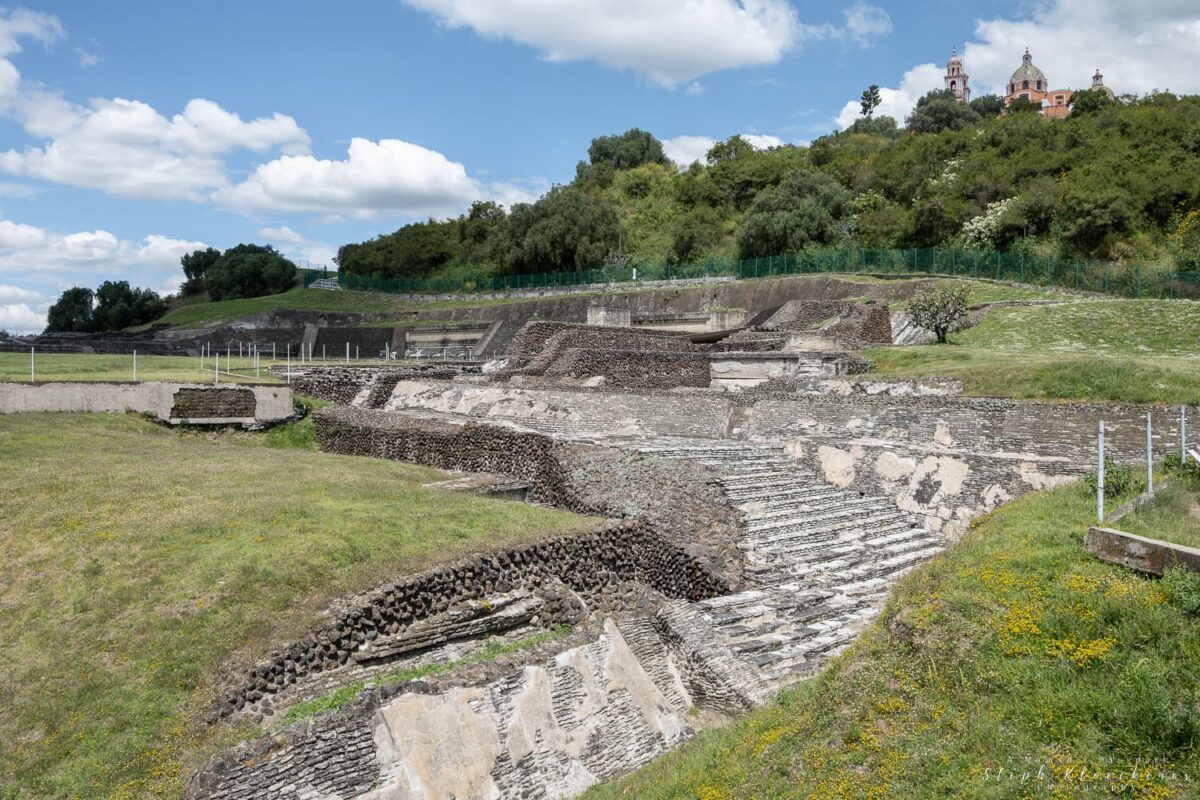
Today, only parts of the Gran Pirámide de Cholula have been excavated, while large parts of the structure remain buried. Consequently, the archeological site is rather compact, despite the monumental size of the pyramid.

At the southern foothill of the Great Pyramid, you can visit a plaza and the Courtyard of the Altars, that were uncovered during excavations in the 60s. Meanwhile, the western side reveals a small excavated section that was fully reconstructed, and therefore offers a small glimpse of what the hidden structure looks like.
The entry fee for Mexican visitors is 105 MXN, while international visitors have to pay 210 MXN.
In the 1930s, an 8 km long tunnel system was dug into the pyramid to detect the substructure of the pyramid. Of these tunnels, 800 m are usually open to the public and allow travelers to see elements like hidden staircases, but access to the tunnels was closed during the pandemic and has yet to reopen.
Near the exit of the archeological site, you can find a commemorative stone that recalls the most violent event in the town’s history: the Cholula Massacre of 1519. On his way to Tenochtitlan, Spanish conquistador Hernán Cortés was informed by the Tlaxcalans that the Cholulans, who were allied with the Aztecs, were supposedly planning to attack the Spaniards. Fulled with this information, Cortes unleashed an attack during which the Spaniards then murdered between 3000 and 30000 unarmed people, while Tlaxcalan warriors ransacked the city and committed further violent acts.
This massacre had a large impact on the Spanish-Aztec War, and is a pivotal event in Mexico’s colonial history. To my knowledge, this stone is one of few place in Cholula where the massacre is mentioned, so I recommend doing independent research about it before you visit the town.
2. Visit the Museo de Sitio de Cholula
Visiting the Museo de Sitio de Cholula is the best way to understand of the pyramid structure and see artifacts found during the excavations. With only three rooms and 265 exhibited items, it is by no means a large museum, and yet, it is one of the best things to do in Cholula as even a short visit enhances your overall experience in town.
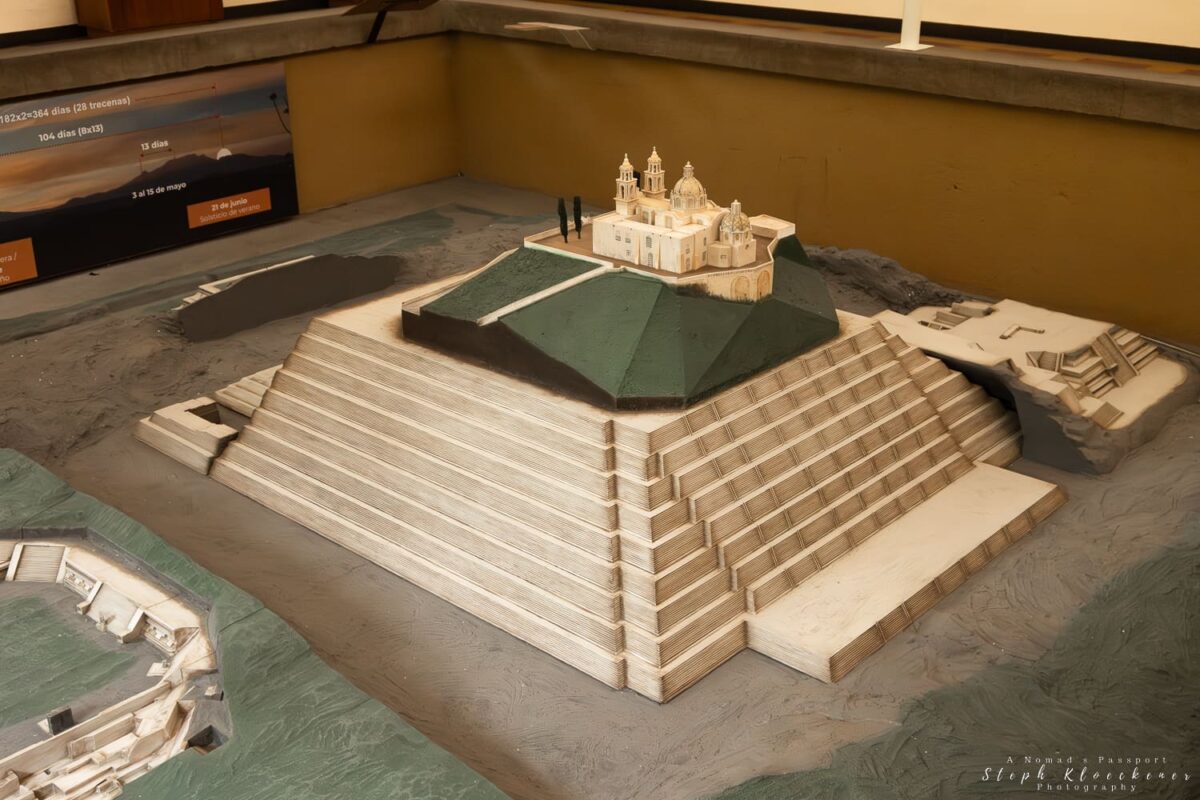
As you enter the first gallery, you can see a model of the pyramid that shows its substructures. While looking at it, you get a much better understanding of the pyramid as it truly helps visitors visualize what lies underneath the hill.
The adjacent gallery displays artifacts like ceramics, but also items made of stone, shells, and bones. Meanwhile, the smallest room is centered around a recreation of the ‘Bebedores’ mural painting found inside the pyramid.
The entry fee is included in your ticket of the archeological site.

3. Take in the Scenic View from the Cholula Pyramid
After exploring the excavated parts of the pyramid and learning about its history, it is time to ascend the structure to get a closer look of the iconic church constructed on top of it and to take in the panoramic view. Given the altitude, you might end up feeling a bit short of breath if you have yet to acclimatize, but overall, it is not too tedious of a climb. You can choose between walking up along winding paths or can walk up a long modern staircase to get to the top of the pyramid.
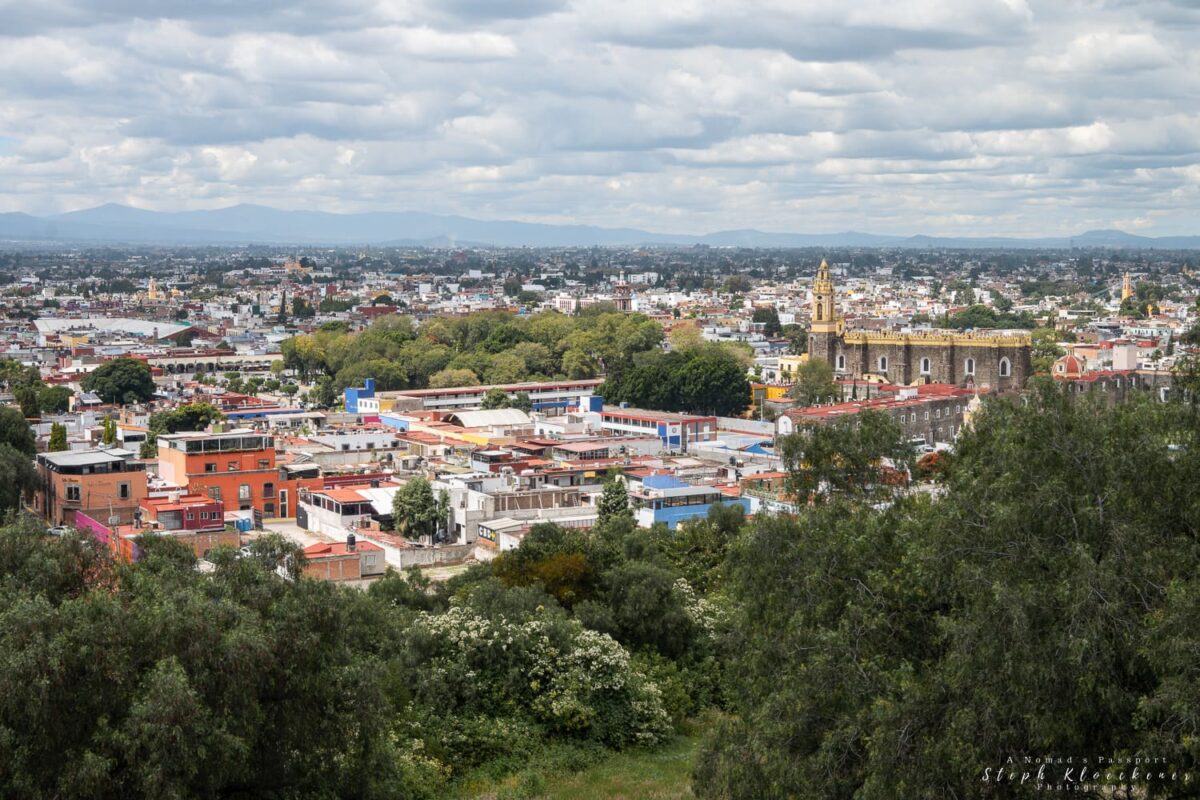
Once at the top, you enjoy an unrestricted view over Cholula, and on clear days, you can spot the volcanoes and the city of Puebla.
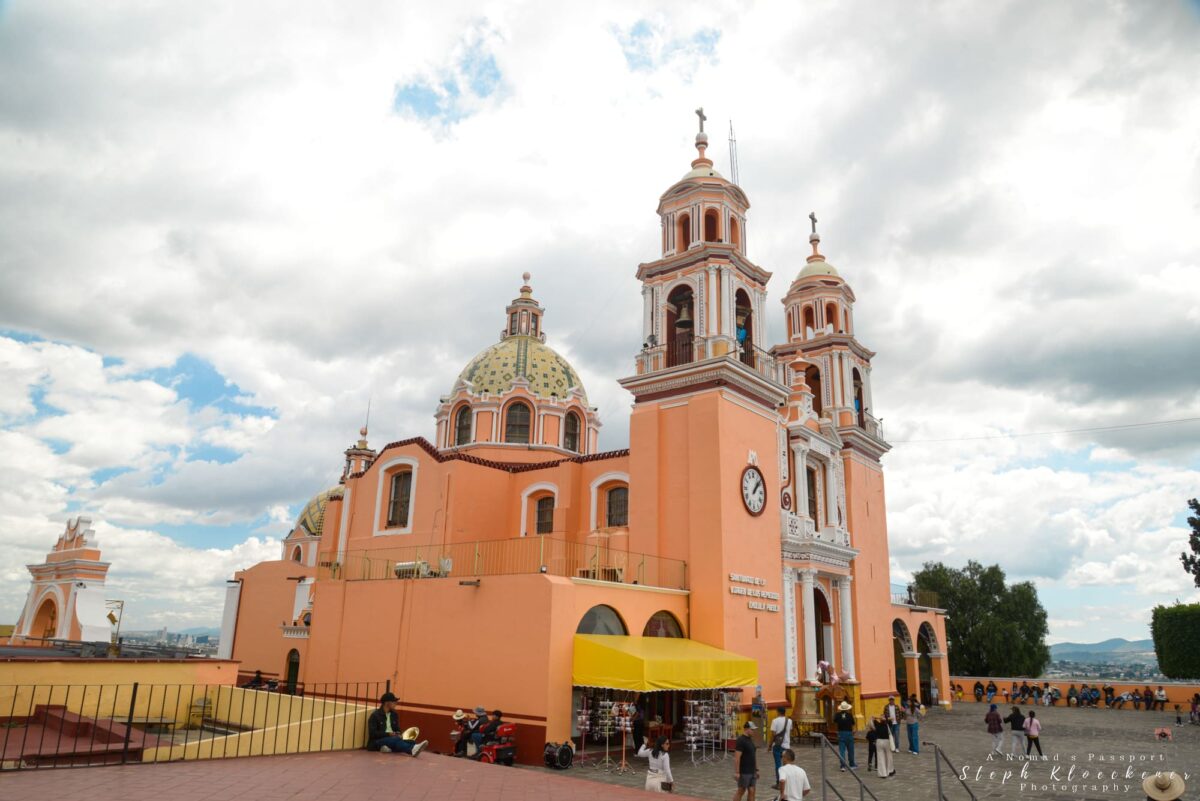
After enjoying the vista, you should take a closer look at the church. Santuario de la Virgen de los Remedios was built between 1574 to 1575, and is undeniably Cholula’s most recognizable landmark.
Later on during my trip, another traveler I met in Mexico City even used the colonial church to identifying the place she had been to when she could not remember Cholula’s name.
During my own visit, there was a celebration inside of the church, so I did not get to take any photos of the interior, but with its gold-leaf decorated vaulted ceiling, it certainly is a beautiful sight.
4. Visit the Convento de San Gabriel Arcángel
It is said that there is a church for every day of the year in Cholula, and while this is not actually the case, the small town has an exceptionally high amount of churches. In total, there are 37 churches which the Spaniards built wherever they found a pre-Hispanic site of worship.
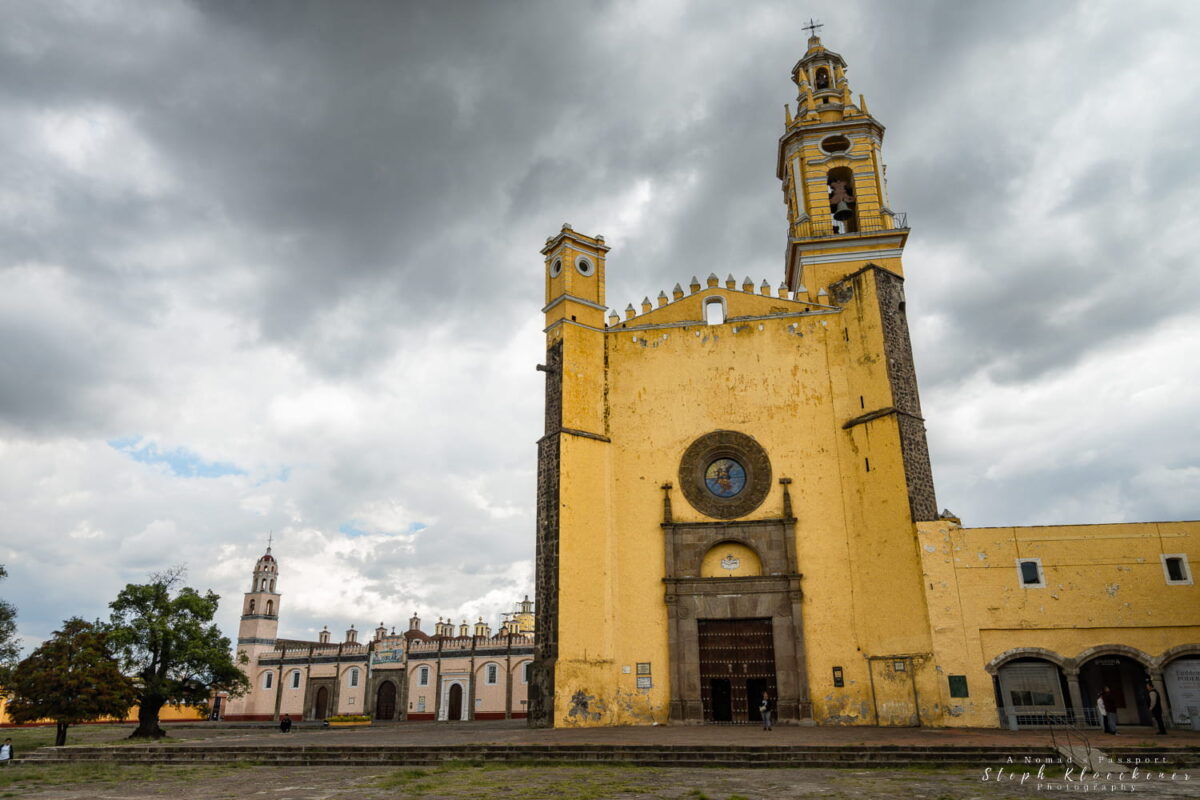
The former Franciscan Convent of San Gabriel is the best example of this, as it was built at the site of the Temple of Quetzalcoatl, the main ceremonial center at the time. Between 1549 and 1552, Indigenous people were forced to build the convent, which stood as a physical replacement of their beliefs and traditions. As such, you should not just regard the religious complex as you see it today, but also reflect on its pre-colonial significance.
When exploring the religious complex today, you will see few traces of the convent’s original decoration, as there have been many renovations. Due to this, the most interesting part is the ’Sacred Art Gallery’ inside the cloister building. It is an exhibition consisting of objects of religious nature and some books from the Franciscan Library.
The buildings also house the Franciscan Library made up of more than 24,000 volumes from the 17th to 19th century. The oldest book is from 1504 and there are many fundamental works of New Spain, but unlike at Biblioteca Palafoxiana in Puebla de Zaragoza, you cannot visit the area where the books are stored.
5. Be stunned by the Interior of Templo de Santa María Tonantzintla
Located just a short UBER ride away from the center of Cholula, the Templo de Santa María Tonantzintla is renowned for the plasterwork in its interior.
Adorned with Mexican iconography like dark-skinned angels and tropical fruit, this church merges Christian and traditional beliefs and culture, which makes it a prime example of Indigenous Baroque. It was constructed in four construction stages spanning from the 17th century to the 20th century.
It is not allowed to take photos inside the church, so you will want to spend a significant amount of time there in order to take in all the details of the lavish decoration covering all walls and the ceiling.
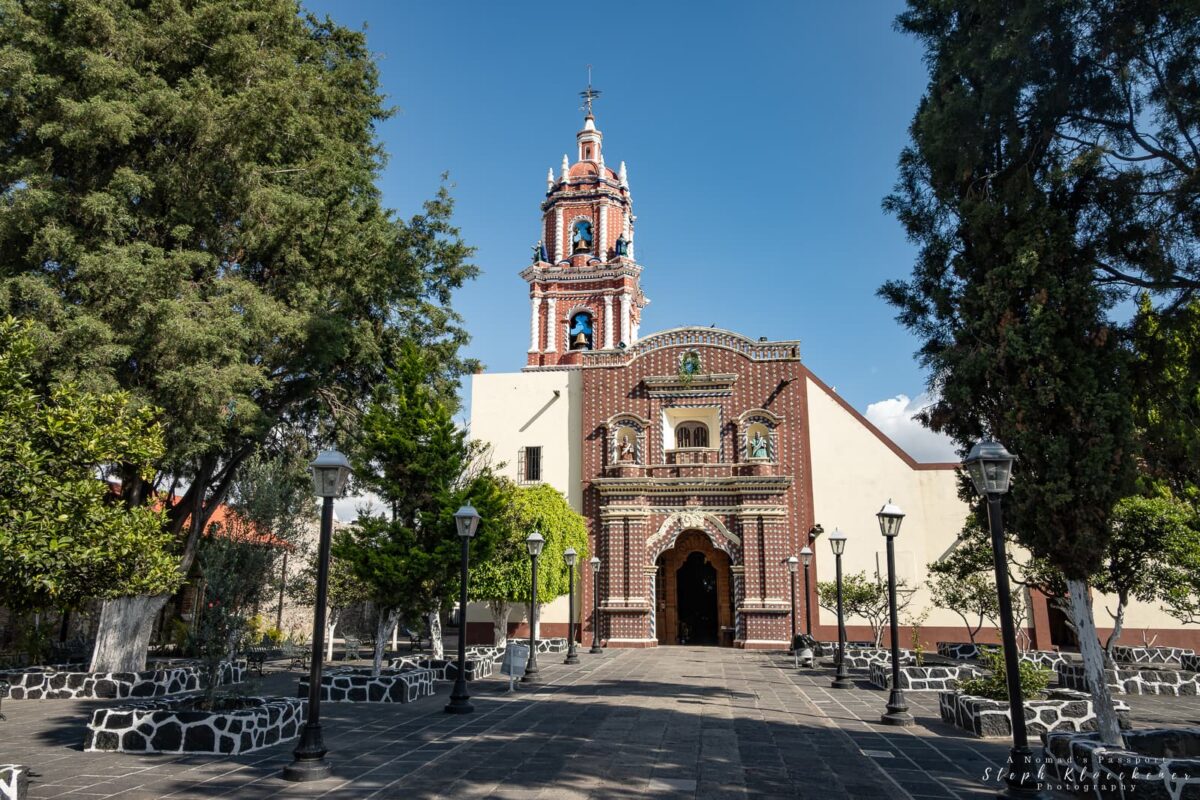
Contrary to the internal areas, the Talavera tile covered exterior of Templo de Santa María Tonantzintla is relatively simple. If you have time to spare, it is also worth it to check out the nearby Iglesia de San Miguelito.
6. Marvel at the Facade of San Francisco Acatepec
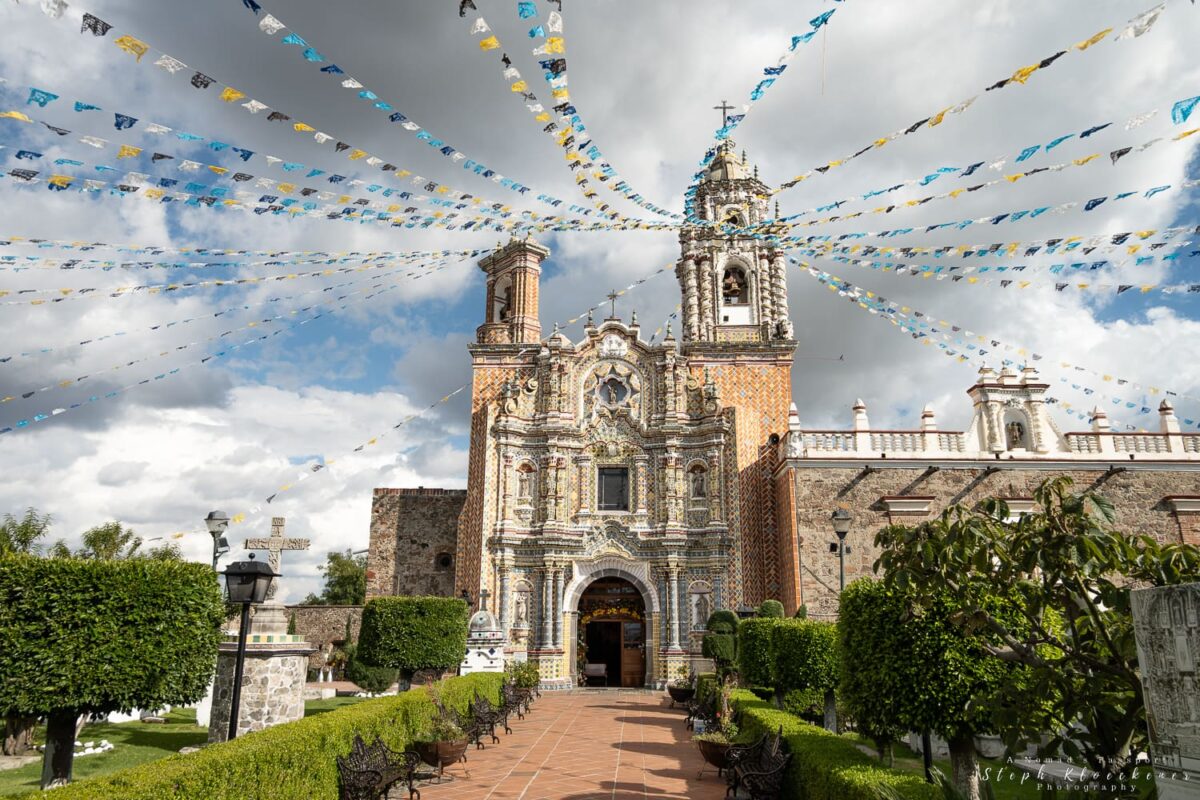
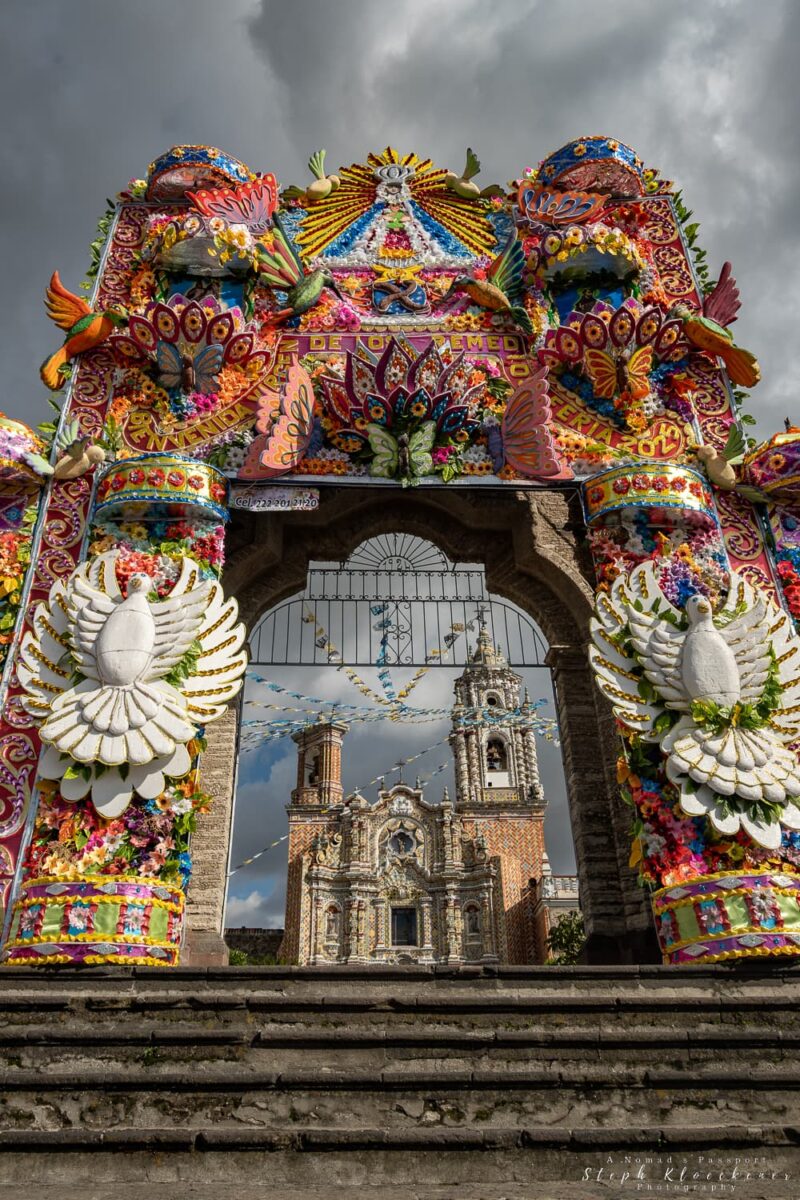
Many churches in the state draw in visitors with their intricately decorated interior, but in the case of the Templo de San Francisco Acatepec it is the exterior you want to pay attention to. The church dates back to 1560, but its frontage was only completed around 1760.
Decorated with Talavera tiles and in a Mexican Baroque style, it resembles an altar. With its patterns, colors, and shapes, it is a unique sight, and you will want to take your time to take in all the details.


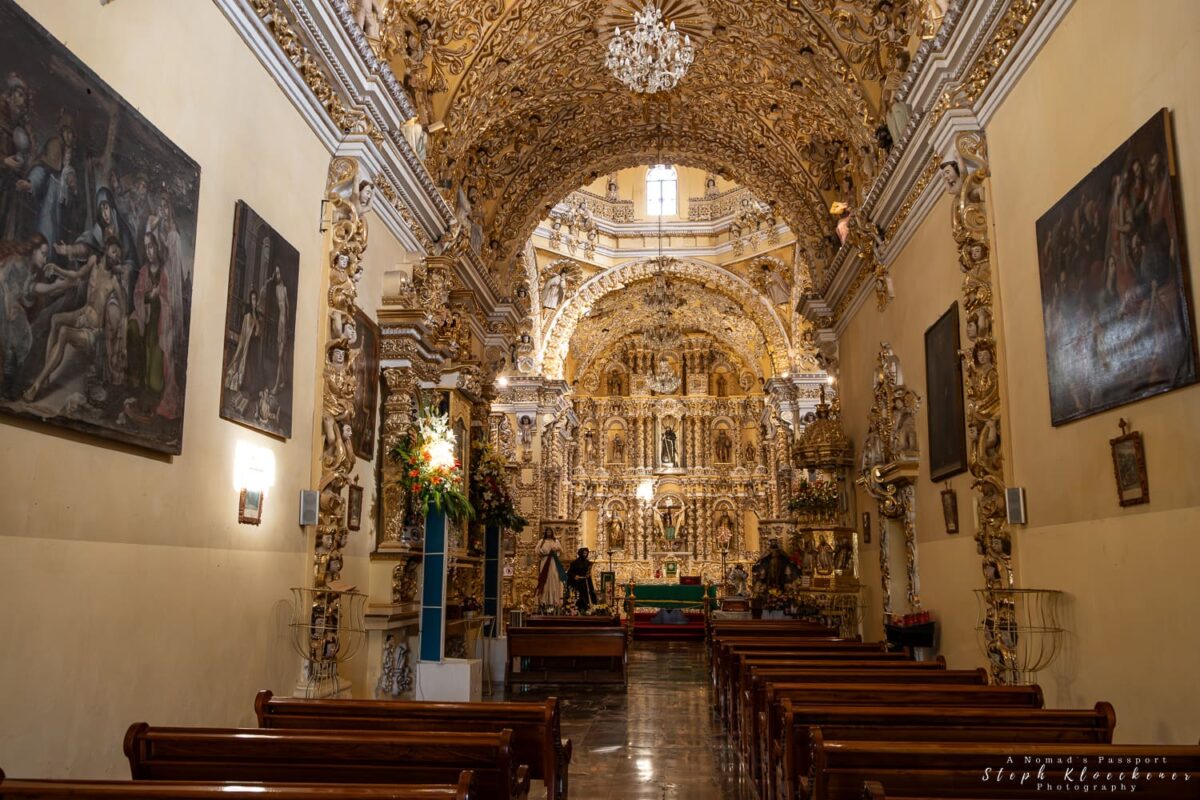
Compared to the exterior, the interior of the church can feel surprisingly bare. While there is a lot of golden decoration and figurines, one can feel a certain dissonance as the two appearances of the church do not fully align.
The visual discord can be attributed to a fire in the 1930s that destroyed the original interior of Templo de San Francisco Acatepec.
7. Buy Souvenirs & Sweets at Parque Soria
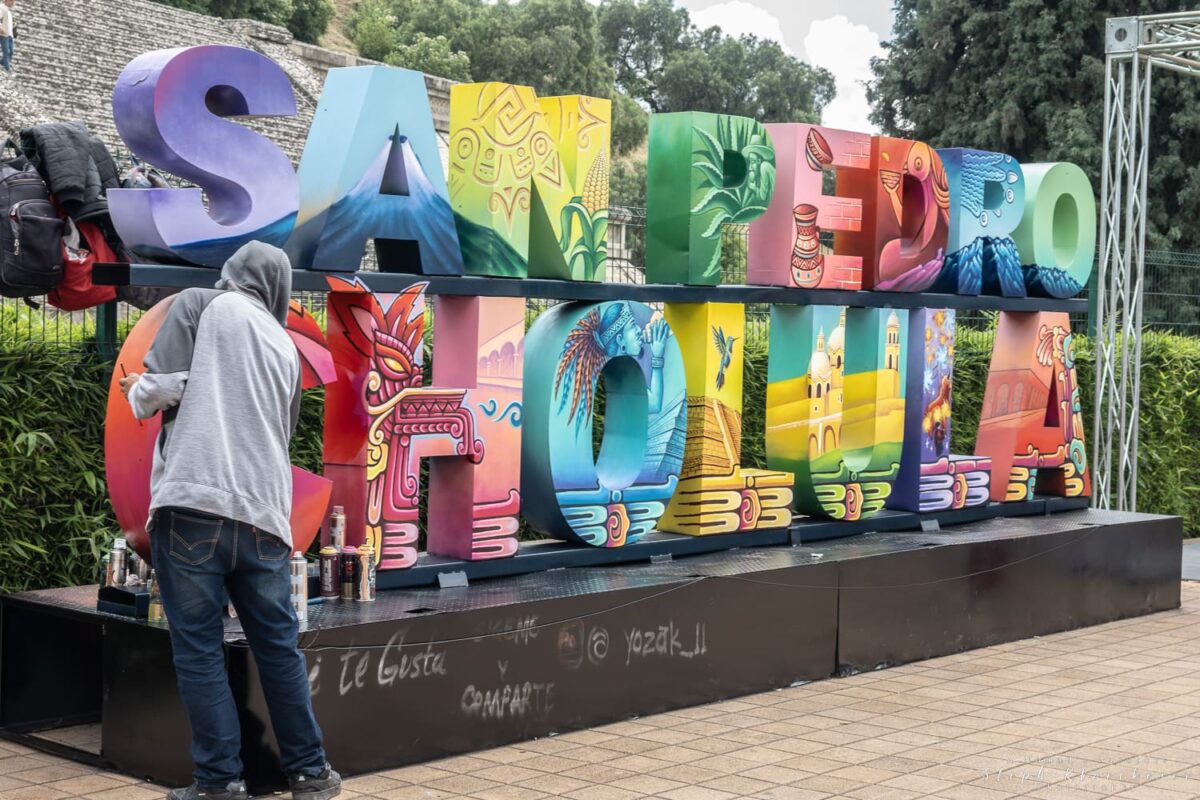
If you want to buy souvenirs and try Mexican snacks, Parque Soria is the place to go. Located right at the exit of the archeological site, the park consists of a large square and a market section with stalls where vendors sell artisan products and snacks ranging from regular candy to local favorites like chapulines (toasted grasshoppers).
Sometimes, the parkis also used as an event location, and such was the case during my own visit.
Given the inland location, it was rather peculiar to see the park transformed into a temporary venue for the U21 Beach Volleyball World Championship. And ultimately, it served as a reminder that modern Cholula is still constructing things that will surprise you and that defy your expectations.
8. Eat Dinner with A View at San Pedrito
With dishes like chile en nogada and mole poblano, the state of Puebla is known for its flavorful and diverse cuisine. Cholula is no exception to this, so travelers exploring the town can expect gastronomic highlights regardless of where they eat.
Cholula has many great restaurants, but among them, San Pedrito stands out. Aside from offering a vast range of Pueblan dishes, the rooftop area of the restaurant elevates your dining experience by offering a fabulous view of the Santuario de la Virgen de los Remedios on top of the Great Pyramid.
As such, I highly recommend eating here while the sun is setting, so you can see the church be illuminated by the golden light of the fading sun, before watching the blue hour cast it in yet another new light.


Aside from the rooftop area, the restaurant with a speakeasy entrance also has a cozy courtyard area, so do not walk away if there are no free rooftop tables. The food served at San Pedrito is delicious, and you will not want to miss out on it.
If you are looking for a vegetarian option, I highly recommend ‘flor de calabaza rebosada rellena de queso fresco’.
9. Visit the Regional Museum of Cholula
Located at the foot of the Great Pyramid, the Museo Regional de Cholula is an ideal addition to your Cholula day trip as visiting enables you to learn more about the local geology, but also art. Set up inside a former sanatorium, which was the first of its kind in the state, different rooms focus on various aspects of the region.
Travelers with an interest in geology will appreciate the room dedicated to the geology of the volcanic valley, while those with a strong interest in art and history tend to be drawn to the rooms displaying pre-Hispanic to contemporary art and artifacts.
A collection of paintings and sculptures created in monasteries and churches during the 16th to 19th century perfectly ties in with the churches you will explore during your visit, while the folk art collection allows you to learn more about traditions and symbols from the regions of Puebla. As such, a visit to the museum perfectly rounds out your exploration of the town’s history and culture, and is one of the best things to do in Cholula.
FAQ
How much time should you spend in Cholula?
Cholula is the most popular day trip destination from Puebla, and it is possible to see all the highlights within a day. However, you should consider slowing down and spending a few days in Cholula. This way, you have time to stroll through the streets, enjoy the delicious Pueblan food, fully take in the atmosphere, and browse the stores and stalls. You can also use Cholula as an alternative base for day trips to the surrounding area, including to Atlixco.
What is the best time to visit Cholula?
Thanks to its relatively stable temperature, Cholula is a great destination year-round. However, if you want slightly cooler temperatures and a low chance of rain, the dry season from October to April is the best time to visit the pueblo mágico. The lowest average daytime temperature is 23°C in January.
Meanwhile, April and May are the warmest months with around 27°C, with May marking the beginning of the rainy season. June and September are the rainiest months in Cholula, and short, intense rain showers are common.
Is Cholula safe?
Cholula and the entire state of Puebla are among the safest destinations in Mexico for travelers, and unless you go looking for trouble, you are unlikely to encounter serious trouble. Like everywhere else in the world, you should still keep your wits on you, stay aware of your surroundings, and keep your belongings in sight.
Based on my experience and based on what my friend who lives there told me, I can recommend visiting Cholula to female solo travelers.
Is Cholula worth visiting?
Cholula might be best known for its church that was built on top of the overgrown pyramid, but as you explore the pueblo mágico, you quickly realize that there is much more to it. As you walk around town, many places can reveal part of Cholula’s rich history and it becomes obvious how the past has shaped the town’s current colorful appearance.
The monumental pyramid is a testimony of Cholula’s significant religious role in ancient times, and the many churches remind you of how many temples were once constructed in the town. And while these churches were once built to replace Indigenous sites, places like the Templo de Santa María Tonantzintla reflect the determination of the people to hold on to their own culture. As such, history has forged Cholula as a place of duality as the pre-Hispanic culture managed to persist.
This unique combination of history and architecture makes Cholula well worth a visit, with its sweeping volcano views and food scene adding yet another dimension to the town’s rich and layered character.
Planning to visit Cholula?
Then Save This Article for Later!
More about Mexico
If you are planning a trip to Cholula you might also be interested in these Puebla travel guides:
Zacatlán – A Charming Puebla Mágico Full of Mosaics
The Best Things to do in Puebla City
Is there anything else you would like to know about Cholula?
Let me know in the comments!