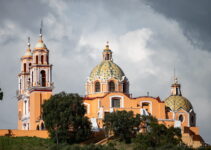
Puebla might be the capital of the state and the fourth largest city in Mexico, but as you explore its historic center and surrounding neighborhoods, it is a feeling of tranquility that greets you instead of the hustle and bustle of major cities. With its Talavera tile-covered colonial buildings and richly decorated churches, it feels like a place where history still lingers in the streets and invites you to learn more about it. And as you pass restaurants and candy shops, the scent of Puebla’s delicious food will further entice you to spend more time in this intriguing city.
Founded in 1531 as Puebla de los Ángeles at a strategic position between the port of Veracruz and Mexico City, the city quickly prospered thanks to commerce. According to a legend, the location was selected based on a dream of Bishop of Tlaxcala Julián Garces who saw a group of angels descend from heaven to trace out the city. After the Battle of Puebla in 1862, it was renamed to Puebla de Zaragoza.
Today, the city’s historic center with its colonial buildings from the 16th and 17th century, Talavera-covered houses, and original 16th grid plan is a recognized UNESCO World Heritage Site. Combined with the delicious culinary traditions, rich history, and lively markets that showcase the local craftsmanship, it makes Puebla a city with a distinctive personality that enchants visitors.
During my recent Mexico trip, I only planned to spend two days in the city, but I discovered that Puebla is not a place you rush unless you want to miss some of the best things to do in Puebla. I wanted to experience the city and the surrounding area with all of its unique elements, so I ended up staying six days.

While I visited Puebla City at my own expense, some activities mentioned in the day trips section were part of a press trip. As always, all opinions expressed are my own and reflect my experience.
This post may contain affiliate links(*), which means I may receive a commission, at no extra cost to you if you make a purchase through a link. Please see the full disclosure for further information.
How to Get to Puebla
While Puebla has an airport, Puebla International Airport currently only has flight connections to five destinations within Mexico as well as flights from Houston in the US. Within Mexico, you can fly there from Guadalajara, Cancun, Tijuana, Monterrey, and Merida.
As such, your best option when traveling to Puebla City from abroad is to fly into Mexico City and then travel to Puebla City by bus, car, UBER, or private transfer.
Upon arrival in Mexico City, you can take a bus to Puebla straight from the airport. Both ADO and Estrella Roja have frequent departure from both airport terminals. The bus ride usually takes 2:00 to 2:30 hours and costs 450 to 457 MXN. You have the choice to arrive at Paseo Destino and Puebla CAPU bus terminal.
With a (rental) car, the driving time from Mexico City to Puebla is around 2 hours. The 83 miles (133 km) long route via highway 150D includes toll roads, so you have to pay 216 MXN for tolls.
Read my article about getting to Puebla from Mexico City and Oaxaca for a more detailed description.
How to Get Around in Puebla
Within the historic center, you can simply walk, and if you venture outside of the center, you can use the metro bus (RUTA) or take an UBER. Intercity buses including those to the surrounding area depart from CAPU and Paseo Destino.
Where to Stay in Puebla
During my time in Puebla, I ended up staying in four different hotels of which I particularly recommend the following two:

Hotel Isabel: This small boutique hotel is only 2 minutes away from the Zócalo and the rooms are situated around an inner courtyard. Sometimes there are very good deals for this hotel.
Gamma Puebla Señorial Centro: Located on Calle de Dulces, the candy street, it is located in a different corner of the historic center. It is a 4 star hotel with comfortable beds and the restaurant located inside the hotel is great.
Aside from these two, I also recommend the following other hotels in Puebla:
Hotel Marqués del Ángel: While I did not stay there myself, this charming boutique hotel was highly recommended to me. It is located close to the Zocalo and all 12 rooms are decorated in the Baroque style.
Wyndham Puebla Angelopolis: If you only have a short stopover in Puebla and want to stay closer to one of the bus stations, or are using Puebla as a base for day trip, this hotel is great. I stayed there after arriving in Mexico and before starting my Puebla road trip, and it was in an ideal location away from the, at times, noisy historic center.

Things to do in Puebla
Despite only being 500 years old, Puebla is a city with a rich history, thriving culture and a flourishing food scene. Therefore, it is no surprise that there are many incredible things to do in Puebla even if one were to stay within the Historic Center. Add the surrounding area, as well as the diverse day trip opportunities, and you will quickly realize that Puebla offers far more experiences than most visitors expect. You can easily spend several days in the city to explore and experience its unforgettable sights, flavors, and cultural experiences.
1. Relax at the Zócalo
There is no better place to take in the atmosphere of a Mexican city than the Zócalo, and this is also the case in the city of Puebla. Located right in the heart of Puebla’s historic center, the lively main square invites locals and travelers alike to sit down in the shade of trees to listen to street performers and people watch.
The plaza is lined by colonial buildings including the Cathedral and the Municipal Palace. There are restaurants and cafes on the ground floor of many of the buildings. The Puebla sign and the Fuente de San Miguel Arcangel, a fountain dating back to1777, are the most photographed sight of the plaza.
2. Marvel at the Cathedral
Puebla’s Cathedral de Nuestra Señora de la Inmaculada Concepción is the second largest cathedral in Mexico and visiting it is one of the best things to do in Puebla even if one is not religious. Its construction began in 1575, and concluded with the cathedral’s consecration in 1649. At the time, it was the tallest church in the Spanish colonies.
As you approach the building, your eyes are instantly drawn towards the Renaissance-style facade before settling on the 70-meter-high towers. If you compare the two, you will notice that only the older north tower has bells.
Upon entering the cathedral, your gaze wanders upon the richly decorated interior ranging from the vaults and arches above the nave to the many paintings and sculptures inside the 14 chapels. The choir is equally remarkable and consists of three organs of which the oldest dates back to the early 18th century. With all its elements, the cathedral truly is a marvel of architecture and craftsmanship.


3. Take in Capilla del Rosario
If you already thought the Cathedral was lavishly decorated, then the Capilla del Rosario (Rosary Chapel) of Templo de Santo Domingo will leave you speechless. While the main church is similarly decorated to the Cathedral, the Rosary Chapel stuns visitors with its 24-karat gold leaf covered interior. It immediately becomes obvious why the chapel is also known as “The House of Gold”.

Built between 1650 and 1690, it is a prime example of Mexican Baroque. In the center of the chapel, a gold-covered marble altar with a baldachin shelters statues of Our Lady of the Rosary, Saint Dominic, and Archangel Gabriel.
Above it, the nearly overwhelming opulence continues with a gilded dome that is adorned with 60 angelic figures. Meanwhile, the walls are decorated with stucco, Talavera tiles, and six paintings depicting early life of Jesus and featuring the Virgin Mary.
Capilla del Rosario is a breathtaking sight, but it also makes you question the morality of it all, as it is a profoundly excessive display of wealth. It is undeniably a stunning demonstration of fine craftsmanship, but I could not enjoy it without thinking of the death and devastation caused by the Conquistador’s thirst for gold.
4. Explore Biblioteca Palafoxiana
Biblioteca Palafoxiana is the oldest public library in the Americas, and visiting is a must for library and book lovers. It was founded when Bishop Juan de Palafox y Mendoza donated his personal library to the Tridentine colleges in 1646 on the condition that it would be accessible to everyone.
Today it houses more than 45,000 volumes across 57 subjects and the oldest books date back to the 15th century. While regular visitors are not allowed to touch the books, it is impressive to see the sheer number of books spread over three levels.
In 2005 Biblioteca Palafoxiana was inscribed in the UNESCO Memory of the World program due to its exceptional universal value and legacy to the contemporary world.

The library is open from Tuesday to Sunday between 10 AM and 6 PM. The entrance fee is 40 MXN per person.

During my visit, the permanent exhibition about the library also featured a temporary exhibition about 20 books that revolutionized humanity and how old knowledge influences society as we know it today.
One of these books was the “Vocabulario de Molina”, a 1555 vocabulary that translated Castilian Spanish to Nahuatl, and therefore enabled future scholars to study the language.
As someone who studied linguistics, I loved seeing a volume so vital to the understanding of this pre-Hispanic language that is still spoken by 1.5 million people in Mexico.
5. Visit Puebla’s Museums
There are many museums in Puebla, so there is bound to be at least one that suits your interests. Visiting the following museums is often considered among the best things to do in Puebla. With the exception of Museo Amparo, museums in Puebla tend to be closed on Mondays so plan your Puebla itinerary accordingly.
- Museo Amparo: Wednesday – Monday 10 AM – 6 PM | 85 MXN — This arts museum displays large collections of pre-Hispanic art from Mexico, and the Viceroyal and 19th Century. Each of the seven galleries focusing on art from Mexico does so from a different angle, and therefore expands your understanding of the country, its people and history.
- Museo Casa de Alfeñique: 48 MXN; free admission on Sundays — Founded in 1896, Museo Casa de Alfeñique displays objects related to the history of the city and is the oldest museum in Puebla. The facade of the 18th century building is decorated with Talavera tiles and is an example of Puebla’s Baroque style architecture.

- Museo San Pedro de Arte: 48 MXN; free admission on Sundays —This art museum is located inside the building of the former Royal Hospital of San Pedro. The 1538 building is known for its double-arched courtyard and features a recreation of the hospital pharmacy.
- Museo Regional de la Revolución Mexicana: 42 MXN — As you approach this museum the first things you will notice are the bullet holes that pierce the facade of the building. This is due to the fact that the building is not a mere museum, but the very place where the Mexican Revolution started. On November 18, 1910, the police who sympathized with dictator Porfirio Díaz raided the house of the Serdán family. Members of the Serdán family members were part of a liberal group opposing the re-election of the dictator in 1910 and involved in planning an uprising in Puebla. The museum tells their story and is the ideal place to learn about the Mexican Revolution.
6. Eat Pueblan Food
Puebla is one of Mexico’s foodie hotspots, so you know you are in for a delicious meal whenever you order one of the city or state’s signature dishes. Upon arrival in the city, I asked my Uber driver for his recommendations on the dishes one has to eat while in the city, and having eaten many of them, I can only say he was absolutely right.
Cemitas: The cemitas is THE Pueblan sandwich. Made with meat, avocado slices, tomatoes, onion, quesillo (Oaxacan cheese), papalo, and sauce, it is the most popular snack in Puebla. I ended up eating one at the restaurant at the Zócalo and loved it. My UBER driver recommended eating cemitas at Mercado de Sabores. The meat can be beef, pork or chicken, so my inner chicketarian was blissfully happy that I could eat this Puebla classic.
Chile en Nogada: Traditionally eaten in August and September to celebrate the Mexican Independence Day, this seasonal dish has the colors of the Mexican flag. It consists of a green poblano chili that is filled with nuts, fruits, spices, and minced meat. It is seasoned with a white walnut-cream sauce and red pomegranate seeds, as well as parsley. It certainly is the most patriotic Pueblan dish and is not to be missed if you visit the state during that time of the year.

Mole Poblano: My driver described it with the words “Oaxacan mole is good, but Puebla’s mole is better. It’s famous.” And while I love both equally, he sure was right when he elaborated that this dish is nationally acclaimed and that one has to eat it while exploring the state. The dark brown sauce is made with more than 20 ingredients including chili peppers, cacao and sugar. It is traditionally served with rice, turkey and sesame seeds. My driver recommended ‘Mural de los Poblanos’ as the best place to eat mole poblano.
Pipian Verde & Rojo: These traditional moles are made with ground pumpkin seeds and are absolutely delicious. I ordered enmoladas with pipian verde, pipian rojo and mole poblano more times than I should admit as I love all three.
Tacos Arabes: When cultures meet, amazing things tend to happen in kitchens, and so was the case when Lebanese immigrants brought their shawarma tradition to Puebla. Over time, a mix of shawarma and tacos emerged. Known as tacos arabes, the meat is flavored with a mix of Middle Eastern and local Mexican spices, and the tortilla is replaced with pan arabe. The meat is pork, and despite trying my best, I was not able to find vegetarian or versions of tacos arabes made with different meat. Please let me know if you are lucky enough to stumble upon a place serving alternative versions!
Where to Eat in Puebla
As one of Mexico’s foodie hotspots, Puebla has many great restaurants, so you are never too few away from a delicious meal. Based on my own experience, I can recommend the following restaurants:
Hook Black: This restaurant is located right at the Zócalo, and consists of two parts. The street level section focuses on traditional Pueblan food. You can sit outdoors or indoors, whereby the outdoor section is the perfect place to eat in people watch. The other section of the restaurant is on the top floor of the building and offers a stunning view of Puebla – the cocktails here are great!
Al Anafre Rojo: One of the places to go if you want to eat traditional Mexican food and many Pueblan specialties.
La Casa del Mendrugo: This restaurant is a great place to eat a traditional Mexican breakfast. It is located under a covered inner courtyard, and quite charming.
7. Buy Sweets at Calle del Dulces
If you love Mexican candies, there is no better place to go than Calle de los Dulces (Street of Sweets). Located on Av. 6 Oriente, this section of the street is speckled with candy stores selling all types of traditional Mexican candy and Puebla specialties. The oldest candy store Dulcería La Gran Fama dates back to 1892 and El Convento de Santa Clara, another popular candy store, opened in 1907.
There is a seemingly endless selection of traditional candies, so I recommend also asking the dulcería attendant for recommendations on which other sweets to buy. It’s what I did, and based on the recommendations, I got the followings candies that are not to be missed when you visit Puebla.
Camote: Cigar-shaped sweet potato candies that are sold in a variety of flavors. If you buy a box, you usually get a mix of lemon, strawberry, and coconut.
Tortita de Santa Clara: Created in a convent during colonial times, these cookies are a Puebla original. The filling is made with pumpkin seeds.
Macarrón: Made with milk, sugar, almonds, and egg whites, these cigar-shaped candies are a real treat.

Borrachitos ‘El Gallito’: These ‘little drunks’ pack a punch. Infused with brandy, wine, or eggnog, these gummy-like candies are another Puebla original.
Jamoncillo: Sold as bars, these often colored candies are made from pumpkin seeds. I think they taste like Christmas. There is another type of Jamoncillo that is also known as “Dulce de Leche”.
The traditional candies also make for great souvenirs for family and friends, so be sure to buy a few boxes to bring home with you.
8. Drink a Shot at La Pasita
While the state is known for mezcal, Puebla City’s signature drink is the ‘Pasita’, a raisin-flavored liqueur that is served with fresh goat cheese and a raisin on a toothpick. While the combination does sound rather peculiar, it tastes great, and you should not leave the city without trying it.
It is the namesake drink of La Pasita, the most famous shot bar in Puebla. The original La Pasita 1 opened in 1916 and is still run by the same family. A bit more than 20 years ago, they even opened ‘La Pasita’ near Puebla’s cathedral.

Both shot bars are classical Mexican cantinas that are decorated with all kinds of nostalgic trinkets from around the world.
They feel like places left untouched by time, and it is quite tempting to stay there a while to try one or two of the other 21 shots they serve. Some shots combine three different liqueurs, so you get a unique, tasty transition of flavors as you slowly drink them.
Just do not try to drink them all or drink too many Pasitas like the Pueblan man who famously drank 100 shots and instantly passed away.
9. Sip Cocktails with a View
Every big city has rooftop bars that offer incredible views, so it should be no surprise that there are several in the historic center of Puebla.
Around sunset I found myself at the rooftop terrace of Hook Black right at the Zócalo, and had a fabulous time. The cocktails were great and the unrestricted view of the Cathedral made it the ideal place to be during the golden hour. While I did not eat at the rooftop restaurant, the food looked delicious.

10. Learn about Talavera Pottery
While walking around the historic center of Puebla you will see many buildings covered in Talavera tiles known as “azulejos”. This omnipresence serves as every day reminder of a Mexican pottery tradition that dates back to the 16th century, and is a result of a mixture of Indigenous, Spanish & Italian ceramic techniques. In 2019, this tradition was included in the UNESCO list of the Intangible Cultural Heritage of Humanity.
During colonial times, Puebla established itself as the center of Talavera production in Mexico and products were shipped all over New Spain. While the tiles are the most prominent example of Talavera pottery in Puebla, the technique is mostly used to make utilitarian items like plates & bowls.

Today, few Talavera workshops remain and the oldest of them, “Uriarte Talavera”, was founded in 1824. The workshop offers tours during which you learn all about the production process and can marvel at the workshop’s private collection and museum.
I did this tour and loved it as it offered a rare glimpse at all the hard work and steps needed to create the ceramics. It is a tour that truly makes you appreciate this pottery tradition.
Monday – Friday 10 AM – 3 PM – 100 MXN p.p.; Saturday 11 AM – 4 PM – 200 MXN p.p.
The tours start at full hour and last 0:45 to 1:10 h.
Some of my favorite buildings covered in Talavera Poblana azulejos are the Biblioteca Palafoxiana, the San Francisco Acatepec church in Cholula, and Casa de los Azulejos in Mexico City.
11. Explore Barrio de los Sapos
Puebla has many colorful streets, but few are as vibrant as Callejon de los Sapos (Alley of the Toads). Its name is a homage to the area’s history, as the street was often flooded during colonial times. Due to this, there were many toads. Today, a statue on a fountain is the only remaining toad.
The alley and the entire neighborhood are lined with colorful houses, many of which are antique stores, bars, and cafes. Benches all along the streets invite you to take a break and listen to music of street performers or pouring out through open doors.
While strolling through the area, I also found several charming artisanal stores, so I consider the neighborhood a great place to buy non-traditional souvenirs such as jewelry.

On weekends, Callejon de los Sapos transforms into a lively artisanal and antique market where local vendors sell crafts alongside vintage vinyl, books, and toys. Occasionally, the market also takes place during the week.
12. Buy Souvenirs at El Parián

El Parián Artisanal Market with its 112 stands is the best place in Puebla to buy authentic crafts and souvenirs. It is the biggest traditional handicraft market in Puebla and at the stalls you will find artisan goods from Puebla but also other parts of Mexico.
If you plan to buy Talavera or other traditional souvenirs while in the city, this bustling open air market is an essential stop.
The history of the market dates back to 1760 and at the time, goods from other areas of Mexico were brought there by mules. The market was established in its current form with permanent little stalls in 1961.
13. Wander through Barrio del Artista
If you love art, you should head to the Artists’ Quarter (Barrio del Artista) with its many galleries and cafes. It is located near El Parián, and as you wander through the streets, you can observe artists painting outside and look at the artworks they display on easels in front of their studios. If you see something you love, pop into their studios and buy a new artwork to decorate your home with. The entire area is a living art space, so take your time to soak in the creative atmosphere of Barrio del Artista.
14. Marvel at the Street Art
Mexico’s vibrant culture often finds itself reflected in its street art, and so is the case in Puebla. While there are few murals to be found in the historic centre, the barrio of Xanenetla more than makes up for it.
Inside the historic centre you can find some murals in the Jardín del Arte at the corner of Calle 4 Sur & Av 5 Ote.
Once a run-down area, street art has turned the Xanenetla neighborhood into a colorful, lively area that is not to be missed. Colectivo Tomate started painting murals in the neighborhood in 2010 with the goal of allowing the city to “talk through its walls”. Located just outside of the historic centre, it started out as a Tlaxcalteca settlement in the 16th century.
This guided tour about the history of the city includes Xanenetla and its street art.
15. Visit the Smallest Volcano in the World
Puebla City is surrounded by some of the highest volcanoes in Mexico, but the city is also home to the ’smallest volcano in the world’. Named Cuexcomate due to its clay pot-like appearance, the inactive volcano is only 42.65 ft (13 m) high and has a crater diameter of 26.25 ft (8 m).
It formed in 1664 when the interaction of water with hot volcanic material caused a volcanic explosion. The steam explosion opened the crater and subsequently expelled the calcareous and sulfurous sediments that now form the volcano.
Today, houses have been built in the area and it is located inside a small park. It is a setting that makes for a rather peculiar sight and that makes visiting Cuexcomate one of the quirkiest things to do in Puebla.

Staircases lead up the volcano and into the 75.46 ft (23 m) deep crater, so you can reach the small, illuminated spring inside of the crater. My own visit was certainly the fastest and easiest volcano hike in my life, but if the metal stairs leading down are wet due to rain, you have to be careful to avoid slipping.
16. Explore the ‘Zone Histórica de los Fuertes’
In most parts of Mexico, Cinco de Mayo is not a significant day, but in Puebla, the day is celebrated with parades and reenactments. This is because the day is a celebration of the Mexican victory over the Second French Empire at the Battle of Puebla. On May 5, 1862, the battle took place at the Loreto and Guadalupe hilltop forts. The area around them is now a park, and you can learn more about the battle at the Museo del Fuerte de Loreto.
Be sure not to skip the Ignacio Zaragoza monument which is dedicated to the general that led the Mexico army to victory. The Teleférico cable car is located nearby, but sadly operations have been suspended for over 2 years now.
While in the area, you can also explore historic tunnels. Long considered an urban legend, the 500-year-old network of tunnels was rediscovered during construction work in 2015. It is assumed that there are more than 10 km of tunnels, but so far only a part has been excavated.
The tunnels connect the historic center with Fort Loreto and based on guns and ammunitions dating back to the mid-19th century found in the tunnels, it is assumed that they played a role during the Battle of Puebla. You will find the entrance at “Pasaje Histórico 5 de Mayo”. Sadly, the tunnels were closed while I was in Puebla, so be sure to check if they are open before you head there.
17. Enjoy the View from Estrella de Puebla
With a height of 263 feet ft (80m), the Estrella de Puebla is the world’s largest portable observation wheel and on sunny days it offers a panoramic view of the city and the volcanoes Popocatépetl and Iztaccíhuatl.
It is located in the commercial zone of Angelópolis, so you can easily combine it with a shopping trip in the nearby mall. A ride on the wheel takes roughly 20 minutes and costs 80 MXN. I ate nearby on my last day in Puebla, but ended up skipping the ferris wheel as the sky was covered in clouds. Otherwise, it would have been the ideal way to get a perfect final view of the city.
Day Trips from Puebla
While there certainly are many great things to do in Puebla City, the state has many other places that are well worth a visit. And while many places offer enough activities to spend a few days there, you can see the highlights during day trips from Puebla. The following places are located within 2 hours of Puebla.
1. Cholula
Located only 30 minutes away from Puebla City, Cholula is a Pueblo Mágico that is best known for its church built on top of an overgrown pre-Hispanic pyramid. While only small parts of the pyramid have been excavated, it is easy to believe that it is the largest pyramid in the world by volume.

Sadly, the tunnels that allow you to explore the interior of the pyramid are currently closed, so you only get to see the excavated parts of the pyramid and can visit the museum of the archeological site.
And of course, you can walk up the overgrown pyramid to truly grasp its size, take in the scenic view, and to get a closer look at the Santuario de la Virgen de los Remedios.
Aside from this famous church, the town has 36 other churches of which two are particularly interesting. While its facade is covered in Talavera tiles, the interior of Templo de Santa María Tonantzintla is a perfect example of a church that combines traditional Christian elements with pre-Hispanic believes. Meanwhile, San Francisco Acatepec has a beautiful facade decorated in Mexican Baroque style and dates back to 1560. The inside of the church features many golden decorations that date to a refurbishment in the 1930s.
You can easily get to Cholula by bus, but if do not want to have to worry about getting to the further away churches and prefer having a tour guide, you can also book this guided tour to Cholula.
2. Atlixco
Atlixco is another Pueblo Mágico and one of the most interesting day trips from Puebla. Thanks to its proximity to Popocatépetl, the soil in the area is very fertile and there are many flower fields and nurseries. Due to this, the town is best known for its flower nurseries and has the full name ‘Atlixco de las Flores’.
As you explore the colorful streets of Atlixco, you often catch a glimpse of Popocatépetl. The Crystal Lookout and Capilla San Miguel Arcángel on top of a hill offer the most stunning view. Other interesting sights include the painted stairs known as La Escalera Ancha, the Ex Convento, and Atlixco’s lively Zócalo with its topiaries and trees.
Leading up to Día de los Muertos at the end of October, the town is the location of the spectacular Valle de Catrinas event. During this event, monumental catrinas that are up to 8 m tall can be found near the town’s main sights, making the event the perfect way to explore Atlixco.
The theme changes every year, so new handcrafted papier-mâche statues are created every year. In 2025, the festival paid tribute to local trades such as tortilla makers, potters, and weavers.

If you want to explore more of the area, you can do a 4×4 tour with Tranvía Turístico La Vitorina. The tour takes you to the nearby Tochimilco and allows you to explore the foothills of Popocatépetl volcano.
The most convenient way to get to Atlixco is to drive there yourself, but you can also catch a colectivo from CAPU bus terminal. Alternatively, you can also book a private guided tour of Atlixco.
3. Cantona
The archeological zone of Cantona is located 100 km northeast of Puebla, and visiting it is a must for those interested in the pre-Hispanic history of Mexico. While only between 1 and 10% of Cantona have been excavated, it is the largest archeological site in the state and there are many structures to be seen. You can easily spend an entire day exploring the site. In its entirety, the city spread out over at least 12 square km.
Cantona was built as a walled, fortified city and at its peak from 600 – 900 AD, it had around 93K inhabitants. The area was first inhabited around 800 BC and urban development occurred from 600 BC onwards. Around 1050 AD, the city was abandoned.

The layout of the city was structured by two main causeways that interconnected with over a hundred small roads. There are many large plazas, and you can still see the individual residential units that were surrounded by walls and with huts once being constructed on elevated terraces.
So far, more than 24 ball courts have been discovered in Cantona which is more than in any other pre-Hispanic city. Interestingly, no cement was used to build the structures and there was no stucco on outer surfaces.
Be sure to visit the museum on site to learn more about the history of Cantona. I recommend doing so before you explore the archeological site as it will grant you a better understanding of the structures you are seeing.
There is no way to get to Cantona by bus, so you either have to rent a car to drive there or join a guided group tour that includes the transfer from Puebla City.
4. Chignahuapan
Chignahuapan is another one of Puebla’s Pueblos Mágicos and is known as Mexico’s Christmas bauble town. All over the town, you will find stores selling intricate glass baubles of all colors and patterns. It is also possible to visit the factories like Fábrica de Esferas Las Almas where the baubles are made to learn more about the process.
While shopping for Christmas decorations alone already makes Chignahuapan worth a visit, the town offers a wealth of culture and nature.
Some of the best things to do during your day trip from Puebla include visiting the Chignahuapan Lagoon, seeing the Catrina murals in ‘El Paseo de la Catrina’, and touring the Basilica of the Immaculate Conception.

The Festival de la Luz y de la Vida from October 30 to November 2 is another highlight of Chignahuapan. The festival takes place at the lagoon and combines dances, music, fireworks, and a light show. It is a reenactment of the nine steps to reach Mictlán.
There are frequent coach bus departures departing CAPU bus terminal, so it is fairly easy to get there without a rental car. Alternatively, you can also book a guided tour that combines Chignahuapan with the nearby Zacatlán.
5. Zacatlán de las Manzanas
Despite being close to Chignahuapan, Zacatlán de las Manzanas is completely different. Often shrouded in fog, this Pueblo Mágico is named after the apple orchards in the area. And while the town’s connection to apples is still present through its cider production and the annual Feria de la Manzana (Apple Festival), it offers many more activities and sights to be seen.

Over the course of more than a decade, entire streets of Zacatlán have been turned into outdoor art exhibitions consisting of mosaics. The mosaics tell stories about the town’s history, culture and the people who live there.
The town is located right at Barranca de los Jilgueros, and on clear days, the small Crystal Viewpoint offers a scenic view of it. If you are looking for a thrill, the 0.87 miles (1.4 km) long zipline over the canyon is the perfect activity.
Zacatlán is also home to the first monumental clock factory in Latin America, and the factory’s museum has a really interesting exhibition about how time has been measured through human history. You should visit it even if you are usually not interested in clocks.
If you have some time to spare during your day trip from Puebla, you should head to Las Brizas Park. Las Brizas waterfall is one of Puebla’s tallest waterfalls, and the park’s viewpoints provide the best view of the thundering water masses.
To get there, you can take the same bus or book the same guided tour that would also take you to Chignahuapan.
FAQ
Is Puebla Safe?
The state of Puebla is known as one of the safest states in Mexico for travelers, and so is the city of Puebla. The historic center where most popular things to do in Puebla is located is particularly safe. However, as in any other big city, you should keep your wits on you and stay aware of your surroundings as there is a risk of pickpocketing. It is also recommended to avoid walking around at night.
Based on my own time in the city, I can recommend Puebla City to female solo travelers.
Puebla is located in one of the most seismically active areas in the world, so there is always a risk of earthquakes. However, severe earthquakes tend to be rare – the last one was in 2017. The city is also close to Popocatépetl, an active volcano that continues to spew ash and gases. And while it certainly is not something most travelers are used to seeing, the frequent smaller eruptions are part of everyday life in Puebla.
The Best Time to Visit Puebla
Puebla is a great destination year-round. However, November to April are the best time to visit the city if you prefer traveling in the dry season. May to October are the rain season with June and September being the wettest months.
Given my own experience of visiting Puebla in October, I recommend keeping an eye on when it is supposed to start raining and planning your day accordingly. I also recommend buying a rain poncho of you visit the city during the rain season.
How many days should you spend in Puebla?
In order to see all Puebla has to offer, you should spend at least 2 days in the city. If you also want to explore the surrounding area by doing day trips to Cholula and Atlixco, you will want to spend 3 to 4 days there.
Puebla Itinerary
There are plenty of things to do in Puebla, so it can be hard to decide what to do if you only have limited time to explore the city. Hopefully, the following itinerary will make the planning process easier for you. It provides a guideline for up to four days in Puebla, and aims to show you as much of the city and surrounding area as possible in a limited time.
Should you have less than four days, I recommend following the itinerary and leaving out the days at the end of the itinerary. But of course, you can always skip a day or swap out individual stops listed below. If you happen to have one more day in Puebla, I highly recommend also doing a day trip to Cantona.
Day 1: Puebla’s Historic Center
Morning: Start the day by exploring the Cathedral and Biblioteca Palafoxiana and afterward stroll through the nearby Barrio de los Sapos.
Noon: Eat lunch at La Casa del Mendrugo.
Afternoon: After lunch, it is time to visit El Parian Market, before taking in the atmosphere of the lively Barrio del Artista. Afterward, buy candy in Calle del Dulces, while walking towards St. Dominic’s Temple to see the opulent Chapel of the Rosary.
Evening: End your first day in Puebla by eating Mole Poblano.
Day 2: Cholula & Culture
Morning: Travel to Cholula to explore the pyramid and the museum, before walking around the pueblo mágico
Noon: Eat a late lunch at San Pedrito – the rooftop area of this restaurant offers a stunning view of the church on top of the pyramid.
Afternoon: Head back to Puebla City to learn more about Talavera tiles at Uriarte Talavera.
Evening: Take an UBER to the smallest volcano in the world, before heading back to the Puebla’s historic center. Eat dinner near the Zócalo and then head to La Pasita to try Puebla’s most iconic shot.

Day 3: Museums & Cinco de Mayo
Morning & Noon: Spend the morning looking at pre-Hispanic Mexican art at Museo Amparo and take in the views from the museum’s rooftop café. Afterward, eat lunch near the Zócalo.
Afternoon: Head towards the Zone Histórica de los Fuertes north of the historic center. Once there, you can tour the forts, visit museums to learn more about the Cinco de Mayo battle, and walk through the tunnels used during said battle.
Evening: Return to the historic center to eat dinner and end the day with a cocktail or two at one of Puebla’s rooftop bars and restaurants.
Day 4: Atlixco & Volcano Views
– rental car required –
Morning & Noon: Drive to Tochimilco and embark on a guided 4×4 tour that allows you to take in stunning views of Popocatépetl, visit a flower nursery at the foothills of the volcano, and hike to a small waterfall. The tour includes a picnic.
You can find out more and book the ‘Volcano Views’ tour here.
Afternoon: Head to Atlixco once the tour ends and explore the Pueblo Mágico’s Zócalo, before walking through town. I recommend walking along Avenida Hidalgo until La Escalera Ancha. Walk up the painted stairs to get to Atlixco’s monumental clock and the Ex Convento. Return to the Zócalo via Calzada 16 de Septiembre where you will find several murals. Walk along Avenida Nicolás Bravo for some souvenir shopping.
Evening: Head up the hill towards the Atlixco’s Crystal Lookout and Capilla San Miguel Arcángel for stunning sunset views. Afterward, return to the town center to eat dinner right at the Zócalo.
Is Puebla worth visiting?
With its culture, food, art, and history, Puebla is one of the most interesting cities in Mexico, and therefore well worth a visit. Thanks to the very diverse things to do in Puebla, the city offers activities for every type of traveler, so you can truly make your trip your own.
Add the potential for day trips to the surrounding area, and you can easily plan everything from a day trip to a full week in the city. The more time you spend there, the more places you will find yourself wanting to discover.
Prior to my own trip, I expected the city to be similar to Oaxaca de Juarez, but the more time I spent there, the more obvious Puebla’s distinctive identity emerged. It is a city where the wealth of the past meets modern life, Talavera tile-covered facades tell stories of times gone by, and food has become an integral part of the city’s cultural identity.
More about Mexico
If you are planning a trip to Puebla, you might also be interested in these Mexico travel guides:
Oaxaca Road Trip
Day Trips from Oaxaca
Is there anything else you would love to know about Puebla?
Let me know in the comments !
Planning to visit Puebla?
Save this article for later!